
There is a strange kind of guilt that only ambitious people understand.
You finally get a free evening. No meetings. No deadlines screaming. No urgent messages. The room is quiet, your body is tired, and technically, you are allowed to rest.
But the moment you sit down, your mind whispers:
“Someone else is working right now.”
And suddenly, rest does not feel peaceful. It feels risky.
You open your laptop “just for five minutes.” You check your email “just in case.” You scroll LinkedIn and see someone announcing a promotion, a new startup, a new fitness transformation, a new book, a new everything. Within minutes, your calm evening turns into a silent courtroom where you are both the accused and the judge.
The crime?
Not doing more.
For ambitious people, rest often feels less like recovery and more like falling behind. And while ambition can be beautiful, energizing, and life-changing, it can also quietly train your nervous system to see stillness as danger.
So why does this happen?
Let’s talk about it.

The Ambitious Mind Is Always Measuring Distance
Ambitious people are rarely just living in the present. They are usually living in three places at once:
- Where they are now
- Where they want to be
- Where they think they should already be
That third place is the most exhausting one.
You may have achieved things other people admire, but your mind quickly adjusts the finish line. The promotion becomes “not senior enough.” The business milestone becomes “not scalable enough.” The gym progress becomes “not consistent enough.” The rest day becomes “proof that I’m losing discipline.”
Ambition often turns life into a permanent gap analysis.
You are not simply asking, “Am I okay today?”
You are asking:
“Am I moving fast enough compared to the version of myself I promised I would become?”
That is a heavy question to carry every day.
Rest Feels Like Wasted Time When Your Worth Is Tied to Output
Many ambitious people do not consciously believe their worth depends on productivity. They may even tell others, “You deserve rest.”
But emotionally, they live by a different rule:
I am valuable when I am useful, improving, achieving, building, producing, learning, or becoming better.
So when they rest, they do not just stop working. They temporarily lose the main way they know how to feel good about themselves.
This is why a relaxed Sunday can feel weirdly uncomfortable.
There is no scoreboard.
No completed task.
No visible progress.
No proof that the day “counted.”
And for someone who has learned to feel safe through achievement, that absence can feel threatening.
Rest is not the problem. The lack of measurable progress is.
The World Rewards Burnout Before It Respects Balance
Ambitious people are not imagining the pressure. Modern culture often celebrates exhaustion as evidence of seriousness.
We praise people for sleeping four hours, replying instantly, working weekends, skipping vacations, and “grinding” while others relax. Overwork is often dressed up as passion. Exhaustion becomes a personality trait. Being unavailable because you are busy can even feel like status.
But the body does not care how inspirational burnout looks online.
Long working hours are not just emotionally draining; they are linked to serious health risks. The World Health Organization and International Labour Organization estimated that long working hours led to 745,000 deaths from stroke and ischemic heart disease in 2016, a 29% increase from 2000.
That does not mean every ambitious person is in danger because they had a busy week. But it does remind us of something important:
A lifestyle built on never stopping eventually sends the bill somewhere.
Sometimes the bill is paid through sleep.
Sometimes through mood.
Sometimes through relationships.
Sometimes through health.
Sometimes through the quiet loss of joy.
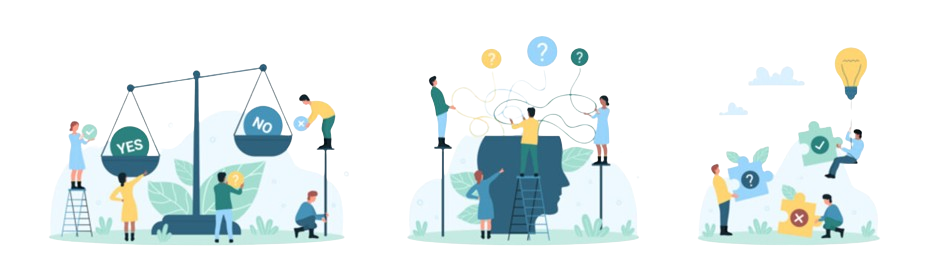
The Fear Is Not Laziness. It Is Falling Behind.
When ambitious people say they “can’t rest,” it is rarely because they hate rest.
It is because rest creates mental space, and mental space allows fear to speak.
The fear may sound like:
- “What if I lose momentum?”
- “What if I become average?”
- “What if people overtake me?”
- “What if I’m not as disciplined as I thought?”
- “What if everything falls apart the moment I slow down?”
Underneath the productivity guilt, there is often a deeper fear:
“If I stop pushing, I might discover I am not enough without the pushing.”
That is not laziness. That is anxiety wearing a work ethic costume.
And it can be especially intense for people who have been praised for being mature, responsible, high-performing, or “different from others” since a young age. When achievement becomes your identity early, rest can feel like betraying the role everyone clapped for.
Comparison Makes Rest Feel Even More Dangerous
Earlier generations compared themselves mostly to classmates, neighbors, colleagues, or relatives.
Now ambitious people compare themselves to everyone, everywhere, all the time.
You see a 22-year-old founder raising millions. A creator buying a house. A classmate moving abroad. A stranger building a dream body. Someone your age giving a keynote. Someone younger than you “figuring life out.”
Even when you know social media is curated, your nervous system still reacts.
It does not say, “This is a carefully selected highlight from another person’s complex life.”
It says:
“We are behind. Move.”
This is why rest after scrolling often feels impossible. Your body may be sitting on a sofa, but your mind has entered a race it never agreed to join.
And the cruel part is that comparison rarely gives useful direction. It mostly gives urgency. Not clarity. Not peace. Not purpose. Just urgency.
Job Insecurity Adds Fuel to the Fire
Ambitious people also live in a world where stability feels less guaranteed than it used to. Industries change quickly. AI changes workflows. Companies restructure. Skills become outdated. People are told to keep learning, keep adapting, keep proving themselves.
In the American Psychological Association’s 2025 Work in America survey, 54% of U.S. workers said job insecurity had a significant impact on their stress levels.
For ambitious people, this kind of uncertainty can turn rest into a threat.
A normal break becomes:
“Should I be learning something instead?”
A weekend becomes:
“Should I be building a side project?”
A holiday becomes:
“Should I use this time to get ahead?”
When the future feels unstable, constant productivity can feel like protection.
But protection can become a prison.
Rest Is Not the Opposite of Ambition
One of the biggest myths ambitious people believe is that rest and success are enemies.
They imagine ambition as a fire that must never go out. So they keep feeding it with late nights, pressure, caffeine, guilt, and self-criticism.
But healthy ambition is not a wildfire. It is more like a controlled flame.
It needs oxygen.
It needs space.
It needs boundaries.
It needs recovery.
Without rest, ambition becomes frantic. You may still move fast, but your decisions get worse. Your creativity shrinks. Your patience thins. Your body becomes tense. Your relationships become background noise. Your mind starts confusing motion with progress.
Rest does not weaken ambition.
Rest protects ambition from turning against you.

The Hidden Reason Rest Feels Boring
Many ambitious people are addicted not to work itself, but to the emotional rhythm of work.
The urgency.
The problem-solving.
The small wins.
The pressure.
The relief after finishing something.
The sense of being needed.
Rest does not provide the same immediate emotional reward.
Watching a sunset does not give you a progress bar.
Taking a nap does not send a congratulatory email.
Sitting quietly does not update your resume.
So rest can feel boring, even when your body desperately needs it.
But boredom is not always a sign that something is wrong. Sometimes boredom is what your mind feels when it is no longer being overstimulated.
At first, rest may feel uncomfortable simply because your system has forgotten how to slow down.
That does not mean rest is failing.
It means rest is unfamiliar.
How to Rest Without Feeling Like You Are Losing
The solution is not to kill your ambition. Ambition is not the villain. The goal is to build a healthier relationship with it.
Here are a few practical shifts.
1. Redefine rest as maintenance, not escape
You do not charge your phone because it is lazy. You charge it because you expect it to function.
Your body and mind are not different.
Rest is not what you do when you have no goals. Rest is what allows you to keep pursuing goals without breaking yourself.
2. Schedule rest before you “deserve” it
If rest only happens after everything is done, it will almost never happen.
There will always be another task, another idea, another message, another improvement.
Put rest on the calendar like a serious appointment. Not because you earned it, but because you need it.
3. Choose rest that actually restores you
Not all rest is equal.
Sometimes you need sleep.
Sometimes you need silence.
Sometimes you need movement.
Sometimes you need a conversation.
Sometimes you need to stop consuming content.
Sometimes you need to journal because your thoughts are louder than your schedule.
A mental health journal app, mood tracking app, guided meditation for anxiety, or stress relief app can help you notice what kind of rest you actually need instead of guessing.
4. Stop using comparison as a planning tool
Other people’s timelines are not instructions.
Someone else’s success may inspire you, but it should not be allowed to bully your nervous system.
Ask yourself:
“Is this comparison giving me useful information, or is it just making me panic?”
If it is only panic, it is not guidance.
5. Practice small moments of guilt-free stopping
You may not go from overworking to peaceful weekends overnight.
Start smaller.
Ten minutes without checking your phone.
One meal without multitasking.
One evening walk without turning it into a productivity podcast session.
One Sunday morning where you do not immediately ask, “How can I optimize this?”
Rest is a skill. You can rebuild it.
When Your Mind Needs a Place to Put the Pressure
Sometimes ambitious people do not need someone to tell them to “just relax.” They need a private place to unpack why relaxing feels unsafe.
This is where tools like ChatCouncil can quietly support the process. ChatCouncil offers 24/7 AI therapy, guided meditations, journaling tools, mood tracking, and simple emotional wellness support for stress and anxiety. For someone who struggles to pause, an AI wellness companion or mental health AI chatbot can help turn racing thoughts into words before they become burnout.
It is not about replacing real human connection or professional care. It is about having a gentle space to check in with yourself when your ambition gets too loud.
Sometimes the first step is not a dramatic life change.
Sometimes it is simply typing:
“I feel guilty when I rest, and I don’t know why.”
That sentence alone can be a beginning.

The Most Ambitious Thing You Can Do Might Be to Stop
There is a version of ambition that looks impressive from the outside but feels terrifying on the inside.
It keeps achieving, but never arriving.
It keeps building, but never breathing.
It keeps winning, but never feeling safe.
And then there is a quieter version of ambition.
The kind that says:
“I want a meaningful life, not just a busy one.”
That kind of ambition still works hard. It still dreams big. It still cares deeply. But it no longer treats the body like an obstacle or rest like a moral failure.
Because the point of ambition is not to outrun yourself forever.
The point is to build a life you are actually present enough to live.
So the next time rest makes you feel behind, pause before believing that feeling.
Maybe you are not falling behind.
Maybe you are finally letting yourself catch up.