
There’s a moment most of us know too well.
You say no - and then immediately start justifying it.
You set a limit - and follow it with a paragraph of context.
You ask for space - and feel the urge to soften it so no one feels uncomfortable.
By the time you’re done explaining, your boundary barely exists.
Over-explaining isn’t a personality flaw.
It’s a survival skill we learned in environments where being clear wasn’t safe unless we were also agreeable.
And lately, something unexpected has been helping people unlearn it:
AI - acting quietly as a boundary coach.

Why We Over-Explain in the First Place
Most people don’t over-explain because they talk too much.
They over-explain because they’re trying to manage reactions.
- “If I explain enough, they won’t get upset.”
- “If I justify it properly, they’ll understand.”
- “If I soften it, I won’t be rejected.”
Over-explaining is rooted in emotional self-protection.
It’s deeply tied to mental wellbeing - especially for people who grew up needing approval to feel safe.
Psychologists often link this pattern to:
- Fear of conflict
- Anxious attachment
- People-pleasing tendencies
The boundary isn’t the problem.
The fear of what happens after the boundary is.
The Hidden Cost of Over-Explaining
On the surface, over-explaining looks polite.
Underneath, it slowly erodes emotional wellbeing.
Because every extra sentence teaches your nervous system one thing:
“My needs need permission.”
Over time, this shows up as:
- Emotional exhaustion
- Resentment
- Confusion about your own limits
- Difficulty asking for health support or saying I need help
And ironically, the more you explain, the less your boundary is respected.
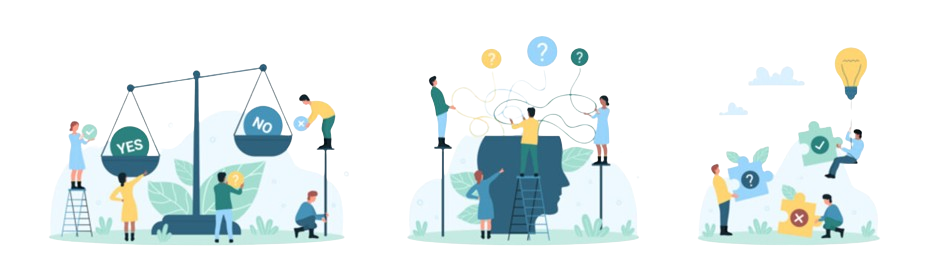
Boundaries Aren’t About Control - They’re About Clarity
A boundary is not a debate.
It’s information.
“I can’t stay late tonight.”
“I’m not available for that.”
“I need some time to think.”
Healthy boundaries don’t require:
- A backstory
- Emotional proof
- Trauma disclosure
But knowing this intellectually doesn’t make it easy emotionally.
That’s where practice matters.
Why Practicing Boundaries With People Is Hard
Practicing boundaries with humans comes with risk:
- They interrupt
- They react emotionally
- They negotiate
- They guilt-trip
Even well-meaning people can unintentionally push back.
So many of us never practice at all.
We just keep adjusting ourselves.
This is where AI in mental health enters in an unexpected role — not as a therapist, but as a rehearsal space.
AI as a Boundary Coach, Not an Authority
When people use Artificial Intelligence for mental health, they often expect advice.
But one of its most powerful uses is much simpler:
helping you say less and mean it more.
With AI, you can:
- Draft a boundary
- See how it sounds without emotional pressure
- Remove unnecessary justification
- Practice different versions until one feels right
There’s no judgment.
No reaction to manage.
No fear of disappointing someone.
Just clarity.
That alone can enhance mental health.

The Shift: From Explaining to Stating
Here’s what many people notice after rehearsing boundaries with AI:
Before:
“I’m really sorry, I know this is short notice and I totally understand if this is inconvenient, but I’ve been feeling really overwhelmed lately and I just don’t think I can make it…”
After:
“I won’t be able to make it tonight.”
Same message.
Different nervous system response.
Boundaries don’t become kinder when they’re longer.
They become clearer when they’re shorter.
Where Journaling Meets Boundary Work
Journaling for mental health has always helped people process emotions.
But when it comes to boundaries, journaling alone can keep you stuck inside the explanation loop.
This is where journaling therapy and AI-supported reflection work together.
You write:
- Why the boundary feels hard
- What you’re afraid will happen
- What you actually need
AI reflects patterns back:
- Over-apologizing
- Emotional disclaimers
- Justification habits
That reflection builds awareness - a key part of emotional wellbeing.
You’re no longer just venting.
You’re learning.
Boundaries Improve Well Being and Mental Health
Clear boundaries aren’t just interpersonal tools.
They’re regulatory tools.
Research consistently shows that people with stronger boundary skills report:
- Lower stress levels
- Reduced burnout
- Improved emotional regulation
- Better overall well being
In short, boundaries enhance the quality of life.
Not because they push people away
but because they bring you back to yourself.
When You Realize You Don’t Need to Convince Anyone
One of the most freeing moments in boundary work is this realization:
“I don’t need agreement for my boundary to be valid.”
AI helps reinforce this because it doesn’t ask why you need a boundary.
It helps you articulate what it is.
That distinction matters.
Especially for people who feel they always need help explaining themselves.
ChatCouncil and Boundary-Building Without Pressure
Some mental health apps focus on tracking behavior or fixing habits. ChatCouncil approaches mental wellbeing differently. It combines AI conversations, wellness journaling, reflective prompts, and meditations for mental health to help people understand their emotional patterns - including boundary struggles. For many users, it quietly becomes a health guide: a place to practice clarity, reduce over-explaining, and build confidence before setting boundaries in real life.

Boundaries Don’t Need to Be Perfect - Just Honest
A common fear:
“What if I say it wrong?”
But boundaries aren’t scripts.
They’re signals.
And practicing them - even imperfectly - is better than never stating them at all.
AI provides a low-stakes environment to try, revise, and simplify.
That’s powerful health support, especially for those not ready to say need therapy but aware something needs to change.
When Over-Explaining Starts to Fade
As people practice clearer boundaries, something else shifts:
- Guilt reduces
- Resentment softens
- Communication feels lighter
You start noticing when you’re about to over-explain and stop mid-sentence.
Not because you don’t care.
But because you finally trust yourself.
That trust is foundational to emotional wellbeing.
A Small Exercise You Can Try
Before your next boundary-setting moment, ask yourself:
- What is the boundary?
- What part is explanation?
- What part is fear?
Say the boundary without the fear.
That’s the version worth practicing.
Final Thought
Over-explaining kept you safe once.
But safety evolves.
Today, your nervous system doesn’t need justification - it needs clarity.
Using AI as a boundary coach isn’t about becoming cold or distant.
It’s about becoming clear without guilt.
And when you stop over-explaining, something surprising happens:
People hear you more.
You respect yourself more.
And your mental wellbeing finally has room to breathe.
Sometimes, the strongest boundary
is the sentence you choose not to add.