
You are brushing your teeth, halfway through an ordinary Tuesday, when your mind suddenly reopens a conversation from three years ago.
Why did they say it like that?
You were not thinking about them. Nothing dramatic happened. A song played, someone used a familiar phrase, or the room became quiet for half a second—and there it was: an old emotional tab glowing at the top of your mind.
Sometimes the tab contains an unfinished argument, an old mistake, a person you no longer speak to, or a version of your life that never happened.
You may wonder, “Why am I still thinking about this? I thought I was over it.”
But a thought returning does not necessarily mean you want the past back. Often, it means your mind still believes there is something inside that memory worth checking.

Closing Something Is Not the Same as Processing It
On a browser, clicking the little “x” makes a tab disappear instantly. Human emotions do not work that way.
You can stop talking about an experience, delete the messages, unfollow the person, and genuinely move forward. Yet part of it may remain unfinished—not because you failed, but because you had to keep functioning before you had time to understand what happened.
Maybe you said, “It is fine,” when it was not fine. Maybe the event ended, but your questions did not. Maybe you accepted the outcome without accepting how it made you feel.
The mind stores some experiences like tabs removed from view but not fully closed. When life becomes quiet or something similar happens, it restores them.
The Mind Dislikes Unfinished Business
Your brain is constantly trying to turn experience into a story that makes sense. It wants to know:
- What happened?
- Why did it happen?
- What does it say about me?
- Could it happen again?
- What should I do differently next time?
When an experience provides no clear answers, the mind may revisit it—not to punish you, but to solve it.
Research on unfulfilled goals has found that unfinished intentions can remain mentally active and interfere with unrelated tasks. Creating a specific plan for addressing them can reduce that interference, even before the goal is completed.
Emotional experiences can behave similarly. Your mind may keep reopening the tab because it has not decided whether the file is complete, dangerous, useful, or still awaiting action.
Five Reasons Old Tabs Reopen
1. The Ending Did Not Match the Emotional Importance
Some things end with a proper conversation or a clear decision. Others end through silence, distance, avoidance, or a message left on “seen.”
When the ending feels too small for what the experience meant, the mind keeps returning to the gap. It is trying to build a conclusion strong enough to hold the weight of the story.
Perhaps you shared years of friendship with someone, only for the connection to fade through increasingly delayed replies. There was no argument, final goodbye, or clear reason. Technically, the friendship ended. Emotionally, however, it may still feel like a sentence that stopped before the final word.
The mind keeps rereading it because it expects the rest of the sentence to appear.
2. You Are Trying to Prevent a Repeat
Suppose you trusted someone and later discovered they had been dishonest. Months after the relationship ends, you may replay tiny details: delayed replies, odd explanations, or the moment your stomach tightened but you ignored it.
The mind may be studying the past for warning signs. It is asking, “How can I make sure I never miss this again?”
This is one reason memories often return when you enter a similar situation. Your mind is not necessarily longing for the old relationship. It may be searching its records for information that could protect the new one.
The problem is that no amount of replay can make future relationships completely risk-free. Useful reflection can eventually turn into an endless security check. Instead of learning from the memory, you become trapped inside its surveillance footage.
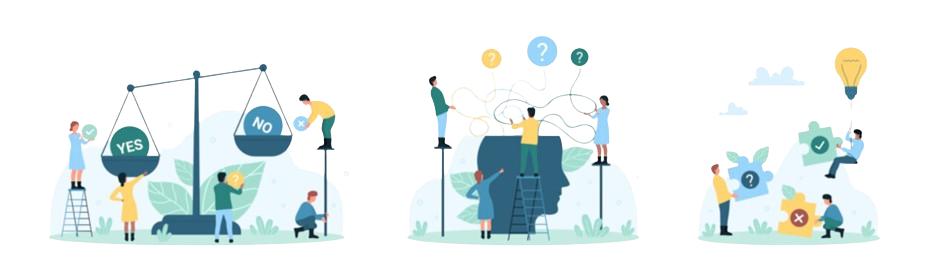
3. The Memory Touched Your Identity
The most persistent tabs are often not about what happened. They are about what the event seemed to prove.
A rejected job application becomes, “Maybe I am not talented.”
A friendship ending becomes, “People eventually get tired of me.”
A public mistake becomes, “Everyone sees me as incompetent.”
When a memory becomes linked to identity, your mind does not treat it as old information. It treats it as an active question about who you are.
That is why a seemingly minor incident can stay with you for years. The event itself may have lasted ten minutes, but the meaning attached to it grew much larger. Your mind is no longer reviewing one uncomfortable moment. It is reviewing a verdict about your worth.
The tab stays open because that verdict has never been challenged.
4. Your Present Life Resembles the Past
A new manager uses the same tone as an old one. A new partner becomes quiet during conflict. A friend cancels plans twice. Suddenly, the old tab opens.
The current situation may be harmless, but similarity acts like a shortcut. Your mind pulls up the previous file so it can compare patterns and prepare you.
This is why old emotions can feel surprisingly fresh. You may be reacting not only to the present, but also to everything the present resembles.
A simple message such as “Can we talk later?” may create intense anxiety—not because those four words are inherently threatening, but because they resemble the beginning of an earlier painful conversation. The new moment accidentally clicks an old link.
5. Quiet Finally Gave the Tab Room to Load
During busy periods, the mind prioritizes survival: reply, commute, submit, cook, sleep, repeat. Unprocessed feelings may remain muted because there is no space for them.
Then you take a holiday, finish a project, or lie down at night—and suddenly everything appears.
This can be confusing. You may have managed well during the difficult period, only to feel emotional weeks later when life becomes easier. You might assume you are moving backwards.
Rest did not create the problem. It may simply have lowered the noise enough for you to hear what was already waiting.
Reopening a Tab Does Not Mean You Must Re-enter the Past
A returning memory can feel like an instruction.
Text them. Explain yourself again. Search their profile. Reconstruct the conversation. Find the sentence that would finally make everything make sense.
But not every reopened tab requires external action. Sometimes contacting the person would create more confusion. Sometimes the answer no longer exists. Sometimes the person who owes you clarity cannot provide it.
The tab may need your attention without needing your return.
You can acknowledge a memory without rebuilding your life around it. You can admit that an experience mattered without inviting it back into your present. You can miss the person you believed someone was while still recognising that reconnecting would not be healthy.
A thought is information, not an order.

What the Tab May Actually Be Asking For
Instead of asking, “How do I stop thinking about this?”, ask, “What does this thought still want me to understand?”
Perhaps it wants:
- A feeling to be named honestly
- A boundary you did not know you needed
- A lesson separated from self-blame
- Grief for an ending you minimized
- Acceptance that no perfect explanation is coming
- A decision about what you will do if something similar happens again
Some events remain unfair or senseless. The goal is to decide what belongs in your future and what can remain in the past.
For example, the useful lesson from a painful relationship might be, “I need to speak sooner when something feels wrong.” The harmful conclusion might be, “I should never trust anyone again.”
Both conclusions may emerge from the same memory, but only one helps you move forward.
How to Close a Mental Tab More Gently
Name the Tab Precisely
“I keep thinking about my ex” is broad. Try: “I keep returning to the moment I realised I had ignored my own discomfort.”
Precision reduces the size of the problem. You are no longer processing an entire person or chapter; you are looking at one unresolved element.
A tab titled “My entire failed relationship” feels impossible to close. A tab titled “Why I stayed silent when I felt dismissed” gives you something specific to understand.
Separate Facts From the Story Built Around Them
Write two short columns.
What happened: “I was not selected for the role.”
What my mind concluded: “I am falling behind everyone.”
The event may be real while the conclusion remains open to examination. This works well in a mental health journal app or an ordinary notebook; what matters is making the hidden interpretation visible.
Once the story is visible, you can question it. Was this one rejection really proof that you lack ability? Were there other explanations? Would you speak to a friend as harshly as you are speaking to yourself?
Give Unfinished Concerns a Next Step
When action is possible, make it specific:
“On Friday, I will update my portfolio and ask one person for feedback.”
A vague promise such as “I need to fix my career” keeps the tab active. A concrete next step tells your mind the issue has been scheduled rather than abandoned.
The same principle can apply emotionally. Instead of promising to “deal with everything someday,” decide to spend fifteen minutes writing about one part of the experience tomorrow evening.
The mind often relaxes when it trusts that a concern has not been forgotten.
Create Closure Without Pretending Everything Is Resolved
Try writing:
“I may never know why they acted that way. I do know how it affected me, what I need now, and what I will not accept again.”
Closure is not always receiving the missing answer. Sometimes it is deciding that your life no longer has to wait for it.
You do not have to declare that the experience was acceptable, meaningful, or “meant to happen.” You are simply choosing to stop making your peace dependent on information you may never receive.
Use Support When the Tabs Keep Multiplying
When thoughts become tangled, structured reflection can make them easier to sort. ChatCouncil offers private mental health support through AI counselling, journaling, meditation, and an always-available AI wellness companion. A mental health app cannot rewrite the past, but it can help you slow down, name patterns, and decide which thoughts need care rather than another midnight replay.

Some Tabs Close Slowly—and That Still Counts
Healing is rarely one decisive click. A tab may reopen ten times, but perhaps it stays open for five minutes instead of five hours. Perhaps you stop checking the person’s profile. Perhaps the memory still hurts, but you no longer treat it as proof that something is wrong with you.
That is progress.
The aim is not to erase every old feeling or become someone who never looks back. Your mind revisits the past because it is trying to protect, understand, and organise your experience. The work is to help it do that without letting yesterday occupy every window.
The next time an old tab opens, pause before becoming frustrated with yourself. Look at its title. Notice what triggered it. Ask whether it needs action, understanding, grief, reassurance, or permission to close without a perfect ending.
Then choose what happens next.
Because a memory can appear on your screen without becoming the page you live on.