
Being kind to someone feels like it should naturally bring you closer to them. You remember their birthday, ask how their interview went, offer help when they are overwhelmed, listen when they need to vent, and try to make sure they feel included. From the outside, all the ingredients of a good relationship seem to be there.
And yet sometimes the relationship still feels strangely distant.
The conversations may remain polite rather than personal. They may appreciate you but rarely seek you out. You can spend months being supportive and still feel that the relationship has never moved beyond being “nice.” This can be confusing because many of us grow up with a simple social assumption: if you are good to people, closeness will naturally follow.
Kindness certainly helps create trust and emotional safety, but it does not automatically create connection. Connection usually requires something more mutual: being known, being understood, sharing parts of yourself, and developing a sense that both people are genuinely participating in the relationship.

Kindness and Connection Are Not the Same Thing
Imagine two coworkers, Maya and Nina. Maya is extremely considerate. She covers shifts when Nina needs help, remembers how she takes her coffee, congratulates her when something goes well, and regularly checks whether she needs support.
Nina genuinely likes Maya. But after several months, she realizes that she barely knows anything meaningful about her.
Whenever Nina asks Maya how she is doing, Maya gives a quick answer such as, “I'm good, don't worry about me,” and redirects the conversation. If something personal comes up, Maya listens carefully to Nina but rarely talks about herself. Eventually, Nina knows a great deal about Maya's kindness but surprisingly little about Maya as a person.
That is the difference between being caring and being emotionally visible.
Connection usually develops when both people gradually reveal themselves. Research on relationships has linked intimacy with perceived responsiveness — the feeling that another person understands, validates, and cares about what is happening inside us. Kind behavior can contribute to this, but simply helping someone is not necessarily enough to make either person feel deeply known.
Sometimes Kindness Feels Too General
There is a meaningful difference between treating someone kindly and making them feel personally seen.
For example, saying, “Hope you're doing well!” to a coworker is thoughtful. But saying, “You seemed unusually quiet after yesterday's meeting. Are you okay?” communicates something more specific. It shows that you were paying attention not just to their existence, but to their emotional state.
Many of the moments that create closeness are small and highly personal. A friend remembers that you hate being called on unexpectedly. Your sibling notices that your unusually short replies usually mean something is bothering you. Your partner realizes that when you suddenly start cleaning everything in sight, you are probably stressed.
Kindness communicates that you want good things for someone. Connection often adds another layer: you have noticed this particular person closely enough to understand something about them.
That sense of being recognized can be much more powerful than generic politeness, even when the polite behavior is completely sincere.
Kindness Can Become a Way of Hiding Yourself
Sometimes people are extremely kind because being useful feels safer than being vulnerable.
You may become the reliable friend, the calm coworker, the understanding partner, or the person who never makes anything difficult. You listen carefully, remember important details, offer support, and make yourself easy to be around. People may genuinely admire you for it.
But there can be a hidden cost if nobody ever sees the parts of you that are less convenient.
Perhaps you did not actually want to go to the restaurant everyone chose. Maybe a friend's joke hurt your feelings, but you laughed anyway. Perhaps you are struggling yourself, but whenever someone asks how you are doing, you reassure them instead.
Over time, you can experience a strange contradiction: more people may like you while fewer people actually know you.
The kindness itself is not the problem. The problem begins when kindness becomes a kind of social camouflage. If every disagreement is hidden, every need is minimized, and every uncomfortable opinion is edited before it reaches anyone else, people may end up connecting with a carefully managed version of you.
That version might be pleasant and easy to love, but maintaining it can become lonely.
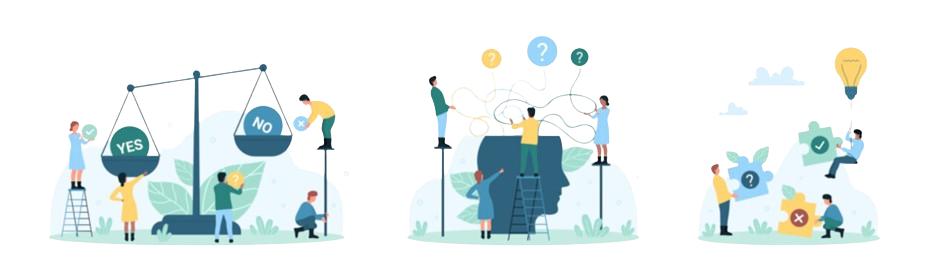
Being Helpful Can Create a One-Way Relationship
Some relationships feel close because one person knows almost everything about the other.
Perhaps a friend calls you whenever something goes wrong. You know about their breakup, family conflict, work problems, money worries, and every complicated situation in between. You have spent hours listening to them and may even be the first person they contact during a crisis.
That can feel like intimacy because you are trusted with deeply personal information. But closeness is not only about how much you know about another person. It also matters whether they know you.
A useful way to think about the balance is to ask:
- Do they know what worries you?
- Can you ask them for help without feeling guilty?
- Do they notice when something is different about your mood?
- Can you disagree with them without worrying that the relationship will collapse?
- Do you feel valued even when you are not solving a problem for them?
If most of the emotional traffic moves in one direction, the relationship may contain care without much reciprocity.
Sometimes kindness makes you extremely important to another person because of what you provide. That is not necessarily the same thing as feeling deeply connected to them.
Kindness Cannot Create Compatibility
Another reason kindness does not always produce connection is much simpler: sometimes two perfectly decent people simply do not click.
One person may love long conversations about emotions and ideas, while the other prefers joking around and doing activities together. One friend might enjoy messaging throughout the day, while another happily disappears for several days without thinking anything of it. One person expresses affection verbally, while another expresses it through practical acts.
Neither person has necessarily done anything wrong.
Kindness creates goodwill, but it cannot manufacture shared humor, conversational chemistry, similar communication styles, compatible values, or mutual curiosity.
This becomes important when someone starts trying to earn connection by becoming increasingly accommodating. They may think that perhaps the relationship would become deeper if they helped more, listened longer, agreed more often, or became easier to be around.
Sometimes nothing changes because the missing ingredient was never kindness. It was compatibility.
Recognizing that can be surprisingly relieving. Not every relationship that remains shallow is evidence that you failed to try hard enough.
Too Much Kindness Too Quickly Can Feel Uncomfortable
There is also such a thing as emotional pacing.
Imagine meeting a new friend twice. The third time you see them, they bring you an expensive gift, insist that you call them whenever you have a problem, offer to drive you to the airport next month, and tell you that meeting you has been one of the best things to happen to them this year.
None of these actions have to come from bad intentions. The person may simply be enthusiastic and generous.
Still, the intensity might feel uncomfortable because the level of generosity is much greater than the current depth of the relationship.
Most connections develop gradually. One person shares a little, the other responds, some trust develops, and then both people reveal a little more. When kindness or generosity moves much faster than mutual intimacy, the recipient can begin feeling an invisible obligation.
Instead of thinking, “This person really likes me,” they may start thinking, “What am I expected to give back?”
Kindness tends to strengthen connection when it feels freely given. When it starts to feel like emotional debt, it can accidentally create distance instead.

Kindness Can Help With Loneliness Without Creating Deep Intimacy
Kind behavior can absolutely have emotional benefits. Research on prosocial behavior — actions intended to benefit other people — has found that helping others can reduce feelings of loneliness in the moment.
That makes sense. Helping a coworker, talking to a neighbor, volunteering, complimenting someone, or checking in on a friend reminds us that we are participating in a social world.
But there is an important distinction between feeling socially connected in general and developing a deep bond with one specific person.
You could be a positive presence in dozens of people's lives and still lack one relationship where you feel completely understood. Kindness can create warmth across your social environment, but deeper connection usually requires repeated mutual participation.
No amount of generosity can build a two-person relationship entirely from one side.
What Helps Kindness Turn Into Real Connection?
Kindness works best when it is accompanied by several other ingredients.
- Mutual curiosity: Both people ask questions and genuinely want to understand each other's inner world.
- Appropriate vulnerability: Each person gradually shares opinions, worries, preferences, hopes, insecurities, and imperfect parts of themselves.
- Responsiveness: When one person shares something meaningful, the other responds in a way that makes them feel heard and understood.
- Reciprocity: The same person is not always the listener, helper, planner, forgiving one, or emotional caretaker.
- Honest boundaries: Saying “I can't” or “I don't agree” sometimes gives people a more accurate picture of who you are.
- Shared experiences: Inside jokes, awkward moments, ordinary afternoons, disagreements, celebrations, failures, and repeated time together slowly create a shared history.
What all of these have in common is mutuality.
Connection develops not only because someone is good to you, but because both people gradually learn what it feels like to know and be known by each other.

You Shouldn't Have to Earn Closeness by Being Useful
For some people, being useful becomes the main way they maintain relationships. They are the person everyone calls for advice, emotional support, favors, organization, or reassurance.
This can create a strong sense of purpose, but it can also make relationships feel conditional.
A useful question to ask yourself is: Do I believe people would still want me around if I stopped doing so much for them?
If that question creates discomfort, it may be worth paying attention to.
Sometimes private reflection makes these patterns easier to recognize. Tools such as ChatCouncil provide AI-powered counselling, journaling, mood reflection, guided meditations, and spaces for AI emotional support. Using a mental health journal app or similar private reflection tool can help you notice whether you tend to build relationships through authenticity, usefulness, avoidance, or a mixture of all three.
The point is not to become less generous.
It is to make sure generosity is not the only part of you that other people are allowed to experience.
Kindness Is an Invitation, Not a Guarantee
There is something freeing about separating kindness from connection.
You can treat someone well without expecting intimacy in return. You can recognize that another person may appreciate you without deeply understanding you. You can also stop interpreting every relationship that fails to deepen as evidence that you were not supportive, patient, interesting, or generous enough.
Some of the strongest relationships contain plenty of kindness, but they also contain things that are messier than kindness. There are disagreements, awkward conversations, boundaries, moments of disappointment, strange habits, vulnerable admissions, requests for help, and uncomfortable honesty.
You know the other person's preferences, but you also know their contradictions. You can tell when something is wrong. They can tell when something is wrong with you. Both people get to give, receive, speak, listen, say yes, and occasionally say no.
That is often where kindness begins to turn into something deeper.
Being kind tells another person that you care about how they feel. Genuine connection develops when both people slowly become comfortable enough to reveal how they feel too.