
The first time you notice it, it’s almost embarrassing.
You’re standing in the kitchen, waiting for the kettle to boil, and there’s… nothing. No urgent problem to solve. No fire to put out. No message you need to overthink before replying. No tight “brace yourself” feeling in your chest.
Just the sound of water heating.
And instead of relief, a strange thought shows up-soft, confused, and louder than you expect:
“Okay… now what?”
Because surviving is a full-time job.
And when that job ends, you don’t instantly become a person who knows how to live.
You become someone who has space… and no map.
This is the part most people don’t warn you about: the in-between. The calm that doesn’t feel calm yet. The quiet that feels like you forgot something important. The moment you realize you outgrew survival mode but you haven’t learned how to inhabit a life that isn’t built around emergencies.

Survival Mode Is a Skillset (And You Got Really Good at It)
Survival mode isn’t a personality. It’s a state.
It’s your brain and body doing exactly what they were designed to do: scan for danger, conserve energy, reduce risk, keep you functioning.
In short bursts, it can be useful. But when it becomes your default, it comes with a cost, your system stays on high alert, and the “wear and tear” builds up over time. Researchers describe this cumulative strain as allostatic load, basically the body’s long-term stress burden.
And stress doesn’t just live in feelings. It affects how you think. High stress can make it harder for the brain’s “planning and decision-making” system to stay online, while emotional and habitual responses become stronger.
So if you spent months or years in survival mode, you probably became brilliant at:
- Reading rooms before you even sit down
- Predicting people’s moods like it’s your job
- Over-preparing so nothing can surprise you
- Downplaying your needs so you don’t “add to the burden”
- Keeping busy because stillness feels unsafe
These are survival skills. They kept you afloat.
But here’s the twist: survival skills don’t automatically turn into living skills.
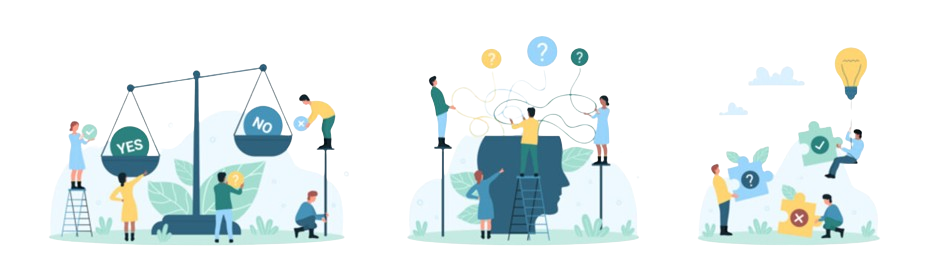
The Day You Realize You’re Not Drowning (But You’re Not Swimming Either)
Outgrowing survival mode often doesn’t feel like fireworks. It feels like an awkward pause.
You might be “better” in obvious ways - sleeping more, crying less, functioning more, laughing sometimes and still feel confused because you expected better to feel like happiness.
Instead, it feels like:
- Boredom that scares you
- Calm that feels suspicious
- Free time that makes you restless
- Peace that feels… empty
This isn’t you being ungrateful. This is your nervous system learning a new language.
When you live in constant urgency, your body treats adrenaline like a normal ingredient. When urgency fades, you can feel under-stimulated like you’re missing the fuel that used to keep you moving.
So you start doing strange things, like creating problems just to feel familiar again:
- picking fights in your head
- doom-scrolling until you feel something
- overworking because rest feels undeserved
- re-reading old texts, reopening old wounds
- saying “I’m fine” but feeling a low hum of panic
It’s not because you want chaos.
It’s because your system remembers chaos.
Signs You’ve Outgrown Survival Mode (Even If You Don’t Feel “Ready”)
Sometimes the clearest proof isn’t how good you feel, it’s what you no longer do.
You may be outgrowing survival mode if:
- You can pause before reacting (even once)
- You don’t feel responsible for everyone’s emotions
- You notice your body signals (tension, hunger, fatigue) instead of ignoring them
- You feel drawn to boundaries, even if they scare you
- You can imagine a future that isn’t only “getting through”
Quietly, your brain is saying: “We’re safer than we used to be.”
And that’s where the confusion begins.
Why Living Feels Hard After Surviving
1) Your identity was built around endurance
When life was heavy, you didn’t have the luxury of asking, “What do I want?”
You asked: “What do I need to do to make it to tomorrow?”
Now that tomorrow is here, you might realize you don’t know your preferences anymore. You know your coping mechanisms. You know your triggers. You know your survival playlist.
But you don’t know what you enjoy without guilt.
2) Joy can feel unsafe
This one surprises people.
When you’ve been hurt, joy can feel like a trap like if you relax, something bad will happen. So even good moments come with an invisible brace:
“Don’t get too excited. Don’t get your hopes up.”
Living requires a new kind of bravery: letting good things be real without immediately preparing for loss.
3) You’re used to urgency giving you purpose
In survival mode, purpose is simple: survive.
When that purpose disappears, you can feel unmotivated and think you’re “lazy,” when you’re actually just experiencing something new:
a life that needs intention, not emergency.
4) Relationships start to shift
When you stop operating from fear, you stop accepting the same dynamics.
You may outgrow:
- being the one who always understands
- being the one who always forgives
- being the one who always explains
And that can feel lonely at first because growth sometimes changes your social ecosystem.

How to Learn to Live (Gently, Without Forcing a Glow-Up)
This is not the phase for dramatic reinvention. This is the phase for small, safe experiments.
Step 1: Build “micro-safety” into your day
Living starts when your body believes you’re safe, not when your mind decides you should be.
Try tiny practices that teach your system: we’re okay right now.
- Put your feet on the floor and name 5 things you can see
- Unclench your jaw every time you open your phone
- Take a 2-minute breathing pause before meals
- Try short meditations for mental health that focus on body relaxation
These aren’t productivity hacks. They’re nervous-system reminders.
Step 2: Create a “Life Menu” (because choice feels overwhelming)
When you’re new to living, open-ended freedom can feel like standing in a supermarket with no list.
So make a menu with four simple categories:
- Rest: what helps you recover?
- Play: what feels light without being “useful”?
- People: who makes you feel more like yourself?
- Purpose: what gives your day a small meaning?
Pick one tiny item from one category each week.
Not a full transformation. Just one bite of life.
Step 3: Practice pleasure without earning it
Survival mode teaches you: “You get nice things after you finish suffering.”
Living teaches you: “Nice things are part of staying well.”
Start small:
- a walk with music
- a shower with a scent you love
- tea in a real cup, not a random mug
- sunlight on your face for 5 minutes
It sounds simple, but it’s a powerful message to your brain:
“I don’t have to be falling apart to deserve care.”
That is emotional wellbeing in practice.
Step 4: Use journaling as a bridge between surviving and living
If thinking feels messy right now, journaling for mental health can help you translate your inner noise into something you can actually understand.
Try “two-line journaling therapy” for 10 days:
- Today I noticed…
- What I need help with is…
Or these prompts:
- “What feels unfamiliar about peace?”
- “What do I do when I’m not in crisis?”
- “What does ‘well being’ look like in a normal Tuesday?”
- “What would enhance mental health for me this week?”
This is health journaling as a compass, not a confessional.
Step 5: Don’t do it alone - get support that fits this season
Sometimes you don’t need a dramatic breakdown to justify support and mental health resources. You just need a guide while you learn how to live again.
That might look like therapy (if you feel you need therapy), a support group, or structured tools that keep you consistent. Some people find a mental health app helpful here, especially ones that offer wellness journaling, reflections, and calming routines that keep your wellness steady on ordinary days, not only hard ones.
For example, ChatCouncil blends guided journaling, meditations, and an AI in mental health conversation flow that helps you notice patterns and build healthier coping habits over time, more like gentle health support than a “fix.” If you’re in that in-between stage, it can act like a simple health guide for your wellness routine without making it heavy.

A Reminder That Might Change Everything
If you’re confused after outgrowing survival mode, it doesn’t mean you’re failing.
It means you’re transitioning.
The World Health Organization notes that mental health conditions are widespread globally, this isn’t a rare, niche struggle. And “getting better” isn’t just about fewer bad days. It’s also about learning how to live inside the quiet without panicking.
So if your brain keeps asking, “What now?”
you can answer, softly:
“Now, I practice living - one small safe choice at a time.”
Not because everything is perfect.
But because you’re finally allowed to build something beyond survival.