
At the end of a long day, when someone asks, “How are you?”, what do you instinctively say?
Many of us respond with a summary of what we accomplished. We list the tasks completed, the emails sent, the goals moved forward. And if the list feels short, we feel it - a subtle sense of guilt or restlessness, as if the day somehow didn’t count.
Over time, this pattern becomes internalized. Productivity stops being something you do and starts becoming who you are. When you’re achieving, you feel valuable. When you’re resting, you feel uneasy. When you’re struggling, you feel like you’re falling behind, not just in work, but in worth.
This is the productivity-worth trap: the belief that your value as a human being is directly tied to your output.
It’s quiet. It’s socially rewarded. And it’s deeply exhausting.

How We Learned to Confuse Output With Identity
From an early age, many of us were praised for performance. Good grades brought attention. Being helpful brought appreciation. Success was celebrated loudly; rest was rarely acknowledged. Over time, your nervous system may have absorbed a simple equation: achievement equals approval.
In adulthood, that equation evolves. It might look like chasing promotions, overcommitting to projects, or feeling anxious during downtime. Even on days off, the mind searches for ways to optimize. Rest feels indulgent unless it is “earned.”
Culturally, this mindset is reinforced everywhere. Social media highlights milestones, productivity systems promise better efficiency, and conversations revolve around hustle. Rarely do we celebrate stillness or emotional balance. When your environment constantly rewards output, it becomes easy to believe that your well being and mental health depend on staying productive.
But there’s a cost to building identity around performance. When productivity becomes your primary source of validation, your sense of worth becomes unstable. It rises and falls with circumstances you cannot fully control.
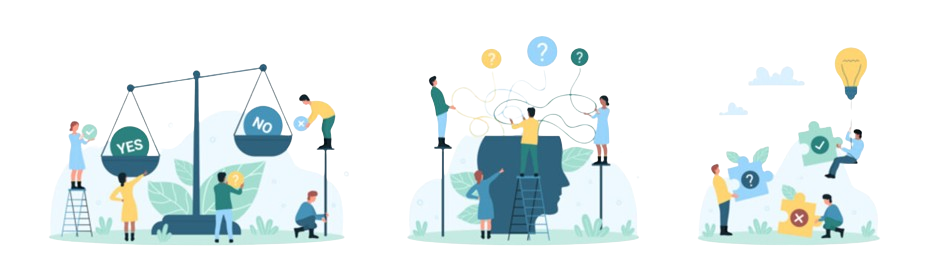
The Emotional Consequences of Constant Measuring
When your worth is tied to output, slow days feel threatening. Burnout feels like personal failure. You may find it difficult to relax without mentally planning the next task. Even achievements provide only temporary relief before the next goal appears.
This chronic self-evaluation keeps your stress system activated. Research on prolonged stress shows elevated cortisol levels can affect sleep, mood, focus, and emotional regulation. But beyond biology, there’s an identity strain. If you believe you are only as good as your performance, exhaustion becomes existential. You don’t just feel tired - you feel inadequate.
Many people in this cycle quietly think, “I need help,” not because they lack skills, but because they cannot stop pushing. Some even wonder if they need therapy simply because they cannot rest without guilt. That internal pressure erodes emotional wellbeing over time.
The trap is subtle because productivity itself is not unhealthy. Purpose, ambition, and effort can enhance mental health when rooted in intrinsic motivation. The problem arises when productivity becomes proof of worth rather than expression of it.
Why Output Feels Safer Than Simply Being
There is a psychological reason productivity feels comforting. Output is measurable. You can count tasks completed, projects finished, numbers improved. Metrics provide certainty. Identity based on measurable success feels concrete.
In contrast, intrinsic worth feels abstract. It requires internal validation rather than external confirmation. And internal validation can feel uncertain if you’ve never practiced it.
So the mind defaults to what it can measure. If you produce, you feel secure. If you pause, you feel exposed.
Over time, this can create a cycle: you work to feel worthy, then feel temporarily secure, then chase the next accomplishment to maintain that feeling. Rest disrupts the cycle, so it triggers discomfort.
Recognizing this pattern is the first step toward breaking it.

Separating Who You Are From What You Do
Imagine losing your job tomorrow. Imagine taking a year off. Imagine not achieving anything measurable for months. Would you still deserve respect, love, and dignity?
Intellectually, the answer is yes. Emotionally, it may not feel that simple.
The productivity-worth trap blurs the line between identity and activity. But your productivity is something you do. Your worth is something you are.
This distinction may sound philosophical, but it has practical implications for mental wellbeing. When you begin to internalize that worth is inherent rather than earned, your nervous system relaxes. Rest no longer signals danger. Slower seasons no longer feel like failure.
Practices like journaling for mental health can help untangle these beliefs. When you write down your automatic thoughts - “I didn’t do enough today,” or “I’m falling behind” — you create space between the thought and your identity. Over time, health journaling reveals how often your self-worth fluctuates based on productivity.
That awareness alone can enhance mental health by stabilizing your sense of self.
Redefining Success in Broader Terms
If output has been your primary metric, redefining success can feel uncomfortable. But broadening the definition of value supports emotional wellbeing in sustainable ways.
Instead of asking only, “What did I accomplish today?”, consider questions like:
- Did I act with integrity?
- Did I respect my limits?
- Did I communicate honestly?
- Did I take care of my body and mind?
- Did I allow myself moments of joy?
These measures support well being and mental health beyond visible achievement. They shift the focus from external performance to internal alignment.
Some individuals find structured reflection tools helpful in this process. AI in mental health has created new spaces for private exploration. Platforms like ChatCouncil - a mental health app focused on guided reflection, emotional tracking, and journaling therapy - allow people to examine identity patterns without judgment. With Artificial Intelligence for mental health assisting in wellness journaling prompts, users can explore burnout, self-worth, and performance anxiety consistently. That kind of health support strengthens identity beyond productivity.
Learning to Sit With Rest
One of the most powerful exercises in escaping the productivity-worth trap is practicing intentional rest without justification.
This does not mean scrolling endlessly or multitasking under the guise of relaxation. It means doing nothing productive and allowing yourself to exist without improvement.
At first, this can feel unsettling. The mind may generate thoughts like, “You’re wasting time,” or “You should be doing more.” Those thoughts reveal how deeply performance has been internalized.
Meditations for mental health can help train your nervous system to tolerate stillness. When you repeatedly experience rest without negative consequences, the brain learns that worth is not conditional on output.
Over time, this enhances the quality of life because you are no longer in constant self-assessment mode.

When You Feel Trapped by Your Own Drive
It’s important to acknowledge that for some, the productivity-worth trap feels deeply ingrained. If burnout feels chronic or anxiety spikes whenever you slow down, you might think, “I need help.” That recognition is not weakness; it’s awareness.
Seeking support and mental health resources can be beneficial, especially if self-worth has been tied to achievement for years. You don’t need therapy because you lack ambition. You might need therapy because you’ve never learned how to separate ambition from identity.
There is strength in exploring these patterns.
A Healthier Identity Model
Imagine an identity built not on output, but on values. In this model, productivity becomes an expression of purpose rather than proof of worth.
You work because you care, not because you must prove yourself. You rest because sustainability matters, not because you’ve earned exhaustion.
This identity model supports emotional wellbeing because it is stable. It doesn’t collapse during slow seasons or setbacks. It recognizes that human beings are more than measurable results.
When you stop measuring your value daily, you free mental space. That space can be used for creativity, connection, and genuine fulfillment.
Final Reflection: You Are Not a Performance Review
The productivity-worth trap convinces you that you must justify your existence through achievement. But you are not a to-do list. You are not your output. You are not your performance metrics.
Your value is not recalculated every evening based on tasks completed.
When you begin to internalize that truth, something softens. The pressure decreases. Rest becomes restorative instead of threatening. Ambition becomes healthier because it is no longer fueled by fear.
And perhaps most importantly, your well beings - your mind, your body, your emotional wellbeing - become more stable.
Because worth was never something you had to earn.
It was always something you carried.