
Imagine waking up in the year 2035 after three nights of poor sleep.
Your phone does not flash a frightening warning or announce that something is wrong with you. Instead, your mental wellness app quietly notices that your sleep has changed, your mood check-ins have become shorter, and the word “exhausted” has appeared repeatedly in your journal.
It asks a simple question:
“You seem to have had a difficult few days. Would you like to talk about what has changed?”
You speak with an AI assistant for ten minutes. It helps you organise your thoughts, suggests a short breathing exercise, and—because the pattern has continued for several days—offers to connect you with a human counsellor.
This scene may sound futuristic, but many of its individual parts already exist.
The next generation of mental healthcare will not be defined by a robot replacing a therapist. It will be defined by care becoming earlier, more continuous, more personalised, and easier to reach.

Today’s System Often Begins Too Late
For many people, mental healthcare starts only after something becomes unbearable.
They wait until anxiety affects their work, stress damages their relationships, or low mood makes ordinary routines feel impossible. Even then, they may struggle to find an affordable professional, explain their distress to family members, or arrange an appointment around work and responsibilities.
The size of this problem is enormous. The World Health Organization reports that more than one billion people are living with a mental health condition worldwide. Anxiety disorders alone affected an estimated 359 million people in 2021, yet only about one in four people with an anxiety disorder received treatment.
The next generation of care must therefore do more than improve therapy sessions. It must reach people during the long period before a crisis develops.
From Mental Healthcare to Mental Health Maintenance
Most people do not wait for their teeth to become unbearable before brushing them. They do not expect one annual workout to keep their body fit.
Mental wellbeing may eventually be treated in a similar way: as something that deserves regular attention, not just emergency repair.
A future mental health app might support brief daily habits such as:
- Recording changes in mood
- Reflecting on emotionally difficult moments
- Practising a two-minute grounding exercise
- Noticing repeated stress triggers
- Preparing thoughts before a therapy session
- Checking whether sleep, isolation, or workload is affecting wellbeing
These activities may seem small, but small observations create context.
A therapist meeting someone for the first time usually sees only a snapshot. A thoughtfully designed mood tracking app or mental health journal app could help the person understand the weeks leading up to that snapshot.
Instead of saying, “I have felt bad lately,” they might recognise:
“My anxiety becomes stronger after several nights of poor sleep, especially when I avoid difficult conversations at work.”
That is a much clearer place from which to begin.
Care That Notices Patterns, Not Just Symptoms
The next generation of mental healthcare could become more proactive.
An AI journaling app, for example, may notice that a user repeatedly writes about guilt after speaking to a particular person. An anxiety support app may recognise that anxious check-ins are becoming more frequent. A wearable device might detect disrupted sleep while a journal records increased irritability.
None of these signals proves that someone has a mental health disorder. Human emotions are too complex to be reduced to a graph.
But patterns can create useful questions.
Perhaps the person is experiencing burnout. Perhaps they are going through grief. Perhaps nothing is clinically wrong, but they need rest, boundaries, reassurance, or a meaningful conversation.
The goal should not be to turn every difficult emotion into a diagnosis. The goal should be to help people notice changes before those changes become overwhelming.
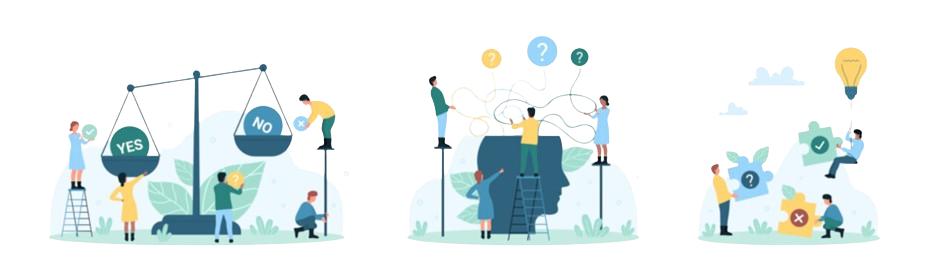
The Rise of the Hybrid Care Team
The future will probably not force people to choose between an AI therapist and a human therapist.
Instead, mental healthcare may work through a hybrid team.
Imagine someone named Neha who attends therapy twice a month. Between appointments, she uses an AI mental health app to record difficult situations, organise her thoughts, and practise techniques recommended by her therapist.
On an ordinary Tuesday, the AI emotional support tool may help her calm down after an argument. During her next human session, her therapist may explore why that argument affected her so deeply.
Each form of support does a different job:
- AI tools can provide availability, repetition, reminders, and structured reflection.
- Human professionals can provide clinical judgment, emotional depth, accountability, and understanding of complex personal histories.
- Friends and family can provide belonging, shared experience, affection, and everyday companionship.
- Crisis services can respond when immediate human intervention is necessary.
This is not humans competing with machines. It is a wider support system in which technology handles some gaps while people remain at the centre.
Support May Become Available Between Appointments
A difficult week contains far more than one difficult hour.
Someone may have a productive therapy session on Friday and still struggle with panic on Sunday night. They may understand a coping strategy intellectually but forget how to use it when emotions become intense.
That is where 24/7 mental health support could become valuable.
A responsible mental health chatbot might help someone slow their breathing, name what they are feeling, examine an anxious assumption, or write down what they want to discuss with their therapist.
It cannot fully understand a person’s life. It should not diagnose a serious condition from a short conversation. It must never create the illusion that professional treatment is unnecessary.
However, a well-designed AI chatbot for mental health can help fill the silence between “I need support” and “my appointment begins.”
Research into digital mental health tools continues to develop. A 2025 analysis published in The Lancet Digital Health concluded that standalone smartphone apps can reduce symptoms associated with depression, anxiety, and sleep difficulties, while also stressing the need to evaluate how such tools work across different users and situations.

Personalised Care Should Mean More Than Using Your Name
Many apps call themselves personalised because they place a user’s name at the top of the screen.
Real personalisation goes much deeper.
A useful AI counselling system might learn that one person prefers short, direct questions while another needs time to write. It may discover that guided meditation helps one user but frustrates another. It could recognise that someone feels most anxious before meetings, during travel, or late at night.
The system could then adapt its support:
- Short grounding exercises for sudden anxiety
- Longer journal prompts for reflective users
- Voice-based check-ins for people who dislike typing
- Visual mood histories for people who think through patterns
- Human referrals when digital support is no longer enough
Personalisation should help people receive relevant support. It should never become secret manipulation or intrusive surveillance.
A Glimpse of This Future Is Already Appearing
Platforms such as ChatCouncil are exploring this more continuous model by bringing AI-powered counselling, guided meditations, journaling, mood tracking, and emotional wellness tools into one accessible space. Rather than limiting support to a scheduled conversation, the platform gives users ways to reflect, check in, and find structured guidance when stress or anxiety appears during everyday life.
This kind of platform represents an important shift: mental healthcare is gradually moving from isolated appointments toward connected emotional support.
The Future Must Also Protect People
Exciting technology can still cause harm when designed carelessly.
Mental health conversations may contain a person’s deepest fears, relationship conflicts, traumatic memories, and private thoughts. That information requires stronger protection than an ordinary shopping preference.
The next generation of mental healthcare must therefore be built around:
Clear privacy
People should know what information is stored, why it is collected, and who can access it.
Honest boundaries
An AI counselor should identify itself as AI and explain what it can and cannot safely do.
Human escalation
A therapy chatbot must recognise when a conversation requires trained professional or emergency support.
Cultural understanding
Advice that makes sense in one family, language, or society may feel inappropriate in another.
Evidence-based design
Tools should be evaluated for safety and usefulness rather than released simply because the technology looks impressive.
In 2026, WHO experts emphasised that AI mental-health tools should be developed with mental-health professionals and people with lived experience. They also highlighted the importance of cultural context, crisis-referral systems, accountability, and trustworthy evidence.
The smartest system will not necessarily be the one that speaks most confidently. It may be the one that knows when to say:
“This is beyond what I should handle alone. Let us find you appropriate human support.”

Better Access Must Not Create a New Divide
Digital care can make support more affordable and accessible, but only for people who can use it.
A sophisticated online therapy app offers little help to someone without reliable internet access, digital literacy, privacy at home, or support in their language.
The future must therefore include more than premium technology for wealthy users. It should also involve community clinics, school programmes, public-health services, low-cost tools, accessible interfaces, and support for different languages and abilities.
WHO describes digital health as a way to help health systems provide more affordable and equitable care, but it also warns that poorly governed innovation can deepen existing inequality.
The next generation of mental healthcare should not merely be more advanced.
It should reach more people.
The Most Human Future May Use More Technology
It may seem contradictory, but technology could make mental healthcare feel more human.
Not because an algorithm can recreate genuine human connection, but because technology can remove some of the obstacles surrounding it.
It can help people find words before a therapy session. It can make private mental health support available during a lonely evening. It can remind someone to practise a technique they already learned. It can show a counsellor patterns that the person struggled to remember.
Most importantly, it can help people seek support earlier.
The future of mental healthcare is not a world in which nobody needs therapists, friends, families, or communities. It is a world in which people do not have to reach breaking point before those sources of care become available.
It may begin with a quiet notification:
“You have not seemed like yourself lately. Would it help to pause and check in?”
Behind that question could be something powerful—a healthcare system that does not simply wait for emotional pain to become an emergency, but meets people earlier, listens more consistently, and helps them take the next healthy step.