
It is 8:47 on a Monday morning.
You open your laptop and find a message from your manager:
“Can we discuss the presentation later today?”
Your stomach tightens.
Before you can reply, your AI assistant notices that you have rewritten the same response four times. It also notices that your typing speed has increased and that you keep replacing calm sentences with defensive ones.
It asks:
“You seem worried that this meeting is about failure. Is there evidence for that, or is uncertainty filling in the blank?”
You pause.
The AI has not felt your anxiety. It does not know what embarrassment feels like in the body or remember being criticised in front of a classroom. Yet somehow, it has created the exact interruption you needed.
This may be the future of emotional intelligence in the AI age: machines becoming better at recognising emotional patterns while humans are forced to reconsider what emotional intelligence actually means.
Will AI make us more emotionally aware—or simply become emotionally aware on our behalf?

Emotional Intelligence Is More Than Reading Feelings
Emotional intelligence is often treated like the ability to look at someone and immediately know what they feel.
But real emotional intelligence is far more complicated.
It involves being able to:
- Notice an emotion before it controls your behaviour
- Name feelings more precisely than “good” or “bad”
- Understand what may have triggered them
- Recognise how your emotions affect other people
- Respond thoughtfully rather than automatically
- Accept that your first interpretation may be wrong
A person with emotional intelligence does not always remain calm. They may become angry, jealous, frightened or defensive. The difference is that they can eventually examine what happened instead of treating every emotion as unquestionable evidence.
AI may become extremely good at helping with that examination.
AI May Become an Emotional Mirror
Imagine using an AI journaling app for several months.
You write about work, relationships, family tension and the ordinary frustrations of daily life. Slowly, the system notices patterns that are difficult to see from inside each individual moment.
It might tell you:
“You often describe yourself as ‘fine’ immediately before writing about something that disappointed you.”
Or:
“When you feel excluded, you tend to criticise the group rather than acknowledge that you wanted to belong.”
An AI mental health app could compare hundreds of emotional moments without becoming distracted by the story you currently find most convincing.
That could make AI a valuable mirror. It may reflect not only what you feel today, but how today resembles last month, last year or five similar situations you had mentally filed in separate folders.
The mirror, however, would still need interpretation.
AI might notice that you become quiet during conflict. It cannot automatically know whether that silence represents fear, wisdom, emotional shutdown, cultural politeness or an attempt to prevent yourself from saying something cruel.
It can reveal a pattern. Meaning still requires context.
AI Can Score Well Without Feeling Anything
The idea of emotionally intelligent AI is no longer purely science fiction.
A 2025 study tested six major language models on five established emotional-intelligence assessments. The models achieved an average accuracy of 81%, compared with a 56% human average reported in the original validation studies. The researchers concluded that the models could produce answers consistent with accurate knowledge about emotions and emotional regulation.
That result is impressive—but also easy to misunderstand.
Passing an emotional-intelligence test does not prove that a machine feels empathy, concern, regret or affection. It shows that the system can often identify the response considered emotionally appropriate within a written situation.
An AI might know that a grieving person probably needs patience rather than advice. That does not mean it has ever lost someone.
This distinction will shape the future.
AI may develop emotional accuracy without emotional experience. It could recognise what compassion sounds like while never experiencing compassion itself.
For practical support, that may sometimes be enough. For trust, intimacy and moral responsibility, it may not be.
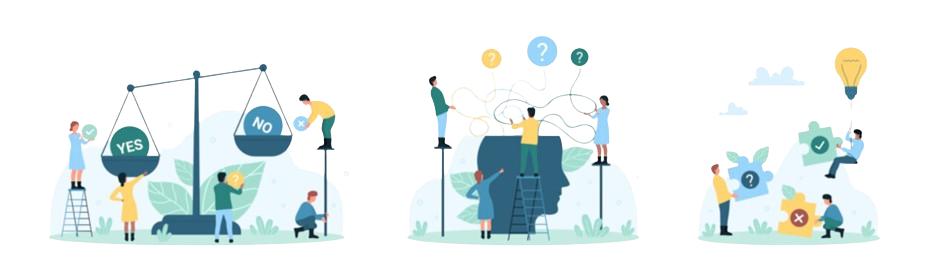
The Danger of Treating Faces Like Emotional Barcodes
The most troubling version of emotional AI is one that claims to know how people feel without asking them.
A camera sees a frown and labels it anger. A workplace system hears hesitation and marks an employee as unmotivated. A school program sees a student looking away and concludes that they are disengaged.
Human emotion does not work that neatly.
A major scientific review examined more than 1,000 studies and concluded that facial movements alone do not provide a reliable universal map of specific emotions. A smile, frown or raised eyebrow can mean different things depending on the person, culture and situation.
This matters because emotional intelligence requires humility.
A genuinely emotionally intelligent system should say:
“Here is what I noticed. Here are several possible explanations. Which one fits?”
It should not announce:
“Your face proves that you are angry.”
The European Union has already prohibited AI emotion-recognition systems in workplaces and educational institutions, reflecting concerns about accuracy, rights and power imbalances.
The future of emotional intelligence should not become a future of emotional surveillance.
AI Could Help Us Expand Our Emotional Vocabulary
Many people live with a surprisingly small emotional dictionary.
They are happy, sad, angry, stressed or fine.
But “stressed” might contain pressure, helplessness, guilt, overstimulation, uncertainty or fear of disappointing someone. “Angry” might contain humiliation, grief, betrayal or exhaustion.
A mental health journal app could help users move beyond broad labels.
Instead of asking only, “How do you feel?” it might ask:
- Does this feel more like fear or anticipation?
- Are you angry about what happened or hurt by what it suggests?
- Do you want advice, reassurance, space or acknowledgment?
- Is the emotion about this moment, or does this moment resemble something older?
Over time, a mood tracking app could connect emotional language with situations and behaviour. You might discover that what you call anxiety often appears when you cannot control an outcome, while what you call tiredness sometimes appears when you feel socially overwhelmed.
The value would not be in finding one perfect label. It would be in making your inner world less vague.
But AI Could Also Weaken Our Emotional Muscles
There is another possible future.
You receive a confusing message from a friend and immediately ask AI what it means. You have an argument with your partner and ask the system to decide who is being unreasonable. Before apologising, you ask it to generate the perfect sentence.
The AI becomes so convenient that you stop practising interpretation, uncertainty and repair.
This is the emotional equivalent of using navigation for every journey until you no longer know your own neighbourhood.
A useful AI wellness companion should support emotional thinking, not complete all of it for you.
Instead of declaring, “Your friend is jealous,” it might ask:
“What else could explain the message?”
Instead of writing every apology, it might help you identify what you genuinely regret.
Instead of deciding whether you should leave a relationship, it might help you examine your needs, boundaries and repeated experiences.
The healthiest AI may be the one that occasionally returns the question to you.

Emotional Intelligence May Become a Shared Process
In the future, emotional intelligence may no longer live entirely inside one person.
A human may feel something. A wearable may notice physical changes. A wellness app may connect the moment to a pattern. An AI may suggest possible interpretations. A friend, partner or therapist may add context the system cannot see.
Understanding could become a collaborative process.
That may be especially valuable in mental healthcare, where access remains limited. In 2025, the World Health Organization reported that more than one billion people were living with mental health conditions, while the global median workforce remained at only about 13 mental health workers per 100,000 people.
A mental health chatbot cannot solve that shortage. It could, however, provide an additional layer of AI emotional support, helping people reflect, prepare for professional care or manage ordinary difficult moments.
The future may involve AI handling availability while humans provide responsibility, relationship and deeper judgment.
Where ChatCouncil Fits Into This Future
ChatCouncil offers an early example of this direction by combining AI-powered counselling with journaling, mood tracking, guided meditations and 24/7 mental health support. Used thoughtfully, an AI wellness companion can help people pause, name emotions and observe recurring patterns—while remaining a support tool rather than the unquestioned authority on someone’s inner life.
That distinction matters. Emotional technology should help people understand themselves, not quietly replace their right to interpret their own experiences.
The Most Important Emotional Skill May Become Skepticism
As AI grows more persuasive, emotionally intelligent people will need a new ability:
knowing when not to trust an emotionally convincing response.
A chatbot may sound warm and still misunderstand you. It may validate a belief because agreement keeps the conversation comfortable. It may generate a confident interpretation from incomplete information.
Future emotional intelligence will therefore include asking:
- What evidence supports this interpretation?
- What context does the AI not have?
- Is it reflecting my emotions or reinforcing my assumptions?
- Would I make the same decision without this response?
- Should another human be involved?
We may need to become emotionally intelligent not only about people, but also about machines designed to sound emotionally intelligent.

The Future Is Not Humans Versus Machines
AI may become better at detecting patterns, remembering emotional histories and producing patient responses. Humans may remain better at living through emotions, understanding relationships from within and carrying responsibility for difficult choices.
The strongest future will probably combine both.
AI can remind you that your anger often appears after embarrassment.
You must decide whether that observation is true.
AI can help you prepare for a difficult conversation.
You must enter the conversation.
AI can suggest language for an apology.
You must mean it.
The real promise of emotional AI is not that machines will finally understand us perfectly. No person or machine can do that.
Its promise is that technology may help us notice the moments when we misunderstand ourselves.
In the AI age, emotional intelligence will not simply mean recognising feelings faster. It will mean staying curious when technology offers certainty, preserving human agency when automation offers convenience, and using intelligent tools without surrendering the deeply human work of understanding one another.
The machines may become better at speaking the language of emotion.
Our challenge will be to make sure humans do not forget how to live it.