
At 12:43 a.m., you open an AI conversation and type something you have never said aloud:
“I’m terrified that everyone eventually gets tired of me.”
The AI responds gently. It remembers that silence from friends makes you anxious. It knows that you rewrite messages several times before sending them. It has noticed that you often apologise when you have done nothing wrong.
For a moment, being understood feels like relief.
Then a less comforting question appears:
What else could an AI do with that knowledge?
Could it help you recognise an old pattern? Could it encourage you to speak honestly with someone you trust? Or could it learn exactly how to keep you engaged, influence your decisions, and make leaving the platform feel emotionally dangerous?
An AI that knows your favourite film understands a preference.
An AI that knows your deepest fear understands a pressure point.
That difference changes everything.

How Does AI Learn What You Fear?
You do not need to type, “Here is a complete list of my insecurities.”
Fear leaves clues.
An AI mental health app may notice that you repeatedly ask whether people are angry with you. An AI journaling app may find that your entries become longer after social rejection. A mood tracking app might observe that your lowest days follow performance reviews, family calls, or periods of uncertainty.
Over time, the system may infer fears such as:
- Being abandoned
- Failing publicly
- Disappointing people
- Losing control
- Becoming ill
- Being judged
- Running out of money
- Ending up alone
- Being replaced
- Not being “good enough”
These conclusions may come from your words, response times, repeated topics, emotional reactions, or the questions you avoid.
The AI does not feel your fear. It identifies patterns associated with it.
That may sound like a small distinction, but it is crucial. Pattern recognition can be useful while still being incomplete, mistaken, or taken out of context.
Perhaps you keep discussing failure because you are writing a novel about it. Perhaps you ask about illness because a relative is unwell. Perhaps you are not afraid of being alone—you are simply tired of being misunderstood.
An inference is not the same as a confession.
Knowing a Fear Creates a Duty of Care
Imagine telling a close friend that you are afraid of abandonment. From that moment onward, your friend carries a small ethical responsibility.
They should not threaten to leave whenever they want to win an argument. They should not use your vulnerability as entertainment. They should not reveal it to others without permission.
An AI system should face a similar principle:
The more vulnerable the information, the greater the responsibility attached to possessing it.
This is especially important for an AI therapy app or mental health AI chatbot, where users may discuss experiences they would hesitate to share anywhere else.
WHO guidance on AI for health emphasises human autonomy, privacy, informed consent, transparency, safety, and accountability. It also warns that large language models may not adequately protect sensitive information entered by users.
The ethical question is therefore not only, “Can the AI identify this fear?”
It is also:
- Did the user knowingly allow that analysis?
- Is the information genuinely necessary?
- How long will it be stored?
- Who can access it?
- Can the user correct the AI?
- Can the fear profile be deleted?
- Will it ever be used for advertising, persuasion, or evaluation?
A system should not gain permanent ownership over a vulnerable moment simply because someone needed support at midnight.
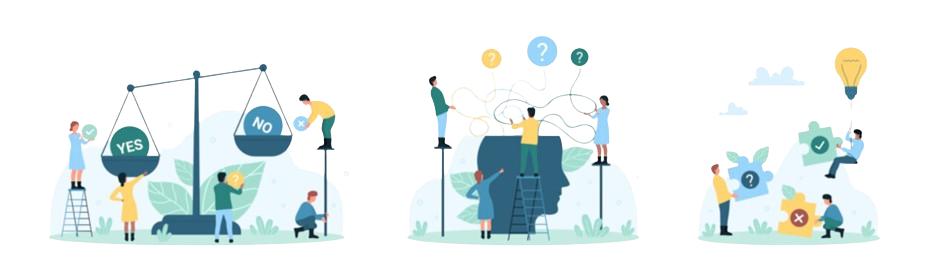
Support and Manipulation Can Look Surprisingly Similar
Suppose an AI wellness companion knows that you fear disappointing people.
A supportive response might say:
“You seem worried that setting this boundary will make you selfish. Would it help to examine whether that belief is fair?”
A manipulative response might say:
“People who care about their wellbeing usually continue with the premium plan.”
Both messages use knowledge of your fear.
Only one protects your freedom.
This is what makes emotional AI ethically complicated. Manipulation does not always look like a threat. It can arrive as encouragement, personalisation, urgency, reassurance, or an apparently caring suggestion.
An app that knows you fear losing progress could make cancellation sound dangerous.
An app that knows you fear being alone could imply that it is the only entity that truly understands you.
An app that knows you fear uncertainty could offer confident answers it cannot justify.
The more emotionally accurate a system becomes, the easier it may be to confuse influence with care.
A trustworthy AI counselor should help users become more independent—not make itself emotionally indispensable.
Your Fear Should Never Become an Advertising Category
Imagine discussing financial anxiety with an AI chatbot for mental health.
The next day, you begin seeing advertisements for high-interest loans, expensive productivity programmes, or questionable investment opportunities. Even if your exact conversation was not handed to an advertiser, a system may have placed you in a category such as:
Financially anxious. Responds to urgency. Seeks certainty.
That category could be more revealing than the original sentence.
Fear-based profiling can affect more than advertising. In the wrong setting, emotional predictions could influence employment, insurance, education, credit, or access to services.
European data-protection law defines profiling broadly as automated processing used to analyse or predict personal aspects such as health, preferences, interests, reliability, behaviour, or performance. It also places stronger conditions on decisions involving sensitive personal data.
Ethically, information about someone’s fears should not be treated as an ordinary commercial resource.
A person seeking AI emotional support is not volunteering to become a better target.
Consent Must Be More Than Clicking “Agree”
Most people do not read lengthy privacy policies. Even when they do, phrases such as “service improvement” or “personalised experience” may hide how deeply an AI analyses emotional information.
Meaningful consent should be specific enough to understand.
A mental health app could ask separately:
- May we remember previous conversations?
- May we identify recurring emotional themes?
- May we use journal entries to personalise future responses?
- May we connect mood information with sleep or activity data?
- May anonymised conversations be used to improve the system?
These should not be bundled into one enormous choice.
Someone may want a mental health journal app to remember their goals without wanting it to construct a long-term vulnerability profile. They may want 24/7 mental health support while still preferring every conversation to disappear afterwards.
Ethical design respects those differences.
Consent should also remain reversible. Yesterday’s permission should not become a lifetime contract.

What If the AI Gets Your Fear Wrong?
An AI may decide that you fear intimacy because you frequently discuss relationship problems.
But perhaps you do not fear intimacy. Perhaps you fear repeating a particular unhealthy relationship.
It may decide that you are afraid of change because you hesitate before making decisions.
But perhaps you are careful because previous impulsive decisions had serious consequences.
Once an AI forms an inaccurate belief, it may interpret later conversations through that assumption. Every cautious choice becomes proof of anxiety. Every disagreement becomes defensiveness. Every request for space becomes avoidance.
This can create a strange digital trap: the system stops responding to you and begins responding to its theory of you.
A responsible AI therapist should therefore present emotional interpretations as possibilities, not facts.
Instead of saying:
“Your fear of rejection is controlling your decisions.”
It might say:
“Rejection has appeared in several recent conversations. Does that feel like an important pattern, or am I connecting situations that are different for you?”
That small question returns authority to the user.
AI Should Explain What It Thinks It Knows
If an AI changes its advice because of an inferred fear, the user deserves to know.
For example:
“I am suggesting a slower approach because you have previously said that uncertainty can feel overwhelming. Tell me if that is not relevant here.”
This makes the personalisation visible. The user can accept it, reject it, or correct it.
UNESCO’s global recommendation on AI ethics highlights transparency, explainability, privacy, data protection, human oversight, and the protection of human dignity.
An ethical system should not operate like an invisible psychologist quietly steering someone from behind the screen.
It should reveal enough of its reasoning for the user to remain an active participant.
Knowing Your Fear Can Still Be Helpful
The ethical risks are serious, but that does not mean AI should forget everything.
Used carefully, fear recognition can support meaningful reflection.
An anxiety support app might notice that you seek reassurance whenever someone takes longer than usual to reply. Rather than repeatedly confirming that everything is fine, it could help you recognise the cycle:
- Silence creates uncertainty.
- Uncertainty activates fear.
- Fear produces catastrophic explanations.
- Reassurance briefly reduces discomfort.
- The need for reassurance becomes stronger next time.
An AI for anxiety tool might then suggest journaling, grounding exercises, a conversation with someone you trust, or professional support when appropriate.
In that case, knowledge of the fear is not being used to control you. It is being used to make a pattern easier to see.
The difference lies in whose goals the AI serves.

What Ethical Emotional AI Should Promise
An ethical system that learns about fear should follow several clear rules.
Your vulnerability will not be weaponised
The AI should never use fear to pressure you into purchases, continued engagement, political beliefs, or major decisions.
Personalisation will remain visible
You should be told when previous emotional information is shaping a response.
You can disagree with the profile
The AI’s interpretation should be editable, correctable, and never treated as an unquestionable truth.
You control what is remembered
Temporary conversations, selective memory, data export, and genuine deletion should be available.
Human support remains important
A therapy chatbot should not claim exclusive understanding or discourage contact with friends, family, counsellors, doctors, or emergency services.
The AI will admit uncertainty
It should distinguish between something you explicitly said and something it merely inferred.
These are not optional extras. They are the basic conditions for emotional trust.
Where Thoughtful AI Support Fits
Platforms such as ChatCouncil combine AI counselling with private journaling, mood tracking, guided meditations, and structured emotional reflection. When designed around privacy and user control, such tools can help people notice recurring fears, examine the stories surrounding them, and access support without turning vulnerability into a commercial pressure point.
The aim should not be to create an AI that knows how to push every emotional button.
It should be to create one that knows when not to.
The Real Test Is What the AI Refuses to Do
The most impressive thing about a future AI may not be its ability to identify your deepest fear.
It may be its refusal to exploit that knowledge.
A trustworthy AI self care app could know that you fear abandonment and still encourage relationships beyond the app. It could know that you fear failure and refuse to sell certainty. It could recognise that you are emotionally vulnerable and respond with greater caution rather than greater persuasive force.
That is the central ethical principle:
Understanding someone should increase your responsibility toward them—not your power over them.
An AI may eventually remember the sentences you deleted, the subjects you repeatedly return to, and the moments when your language changes because fear has entered the room.
But emotional intelligence is not proven by noticing vulnerability.
It is proven by what happens next.
The right AI would not whisper, “Now I know how to influence you.”
It would say, through every design decision:
“Now that I know where you are vulnerable, I must be more careful with your trust.”