
You wake up after seven hours of sleep, but instead of feeling refreshed, you feel as though your mind has already completed half a workday.
Nothing dramatic has happened. You have not answered an email, attended a meeting, or even left your bed. Yet your brain is already running through an invisible checklist:
Did I reply to that message?
What if today’s meeting goes badly?
I need to remember the payment.
Why did she sound distant yesterday?
I really should be doing more with my life.
By the time your feet touch the floor, your mental battery is at 68%.
Like a phone, the mind can lose energy even when the screen appears inactive. Beneath the surface, unfinished tasks, suppressed emotions, imagined conversations, open decisions, and constant self-monitoring may continue running.
These are the background apps draining your mental battery. You may not be actively thinking about them every second, but they repeatedly request attention, send emotional notifications, and quietly consume your capacity.

Why You Can Feel Tired Before Doing Anything
Mental exhaustion is not always caused by the amount of visible work you complete. Sometimes it comes from how many things your mind is trying not to forget.
Imagine carrying a tray containing ten glasses of water. Even while standing still, you must remain alert. You are watching the balance, adjusting your grip, and preparing for movement.
Mental load can feel similar.
You may be carrying a task you have not started, a conversation you are avoiding, a decision you keep delaying, and a worry you cannot resolve. None of them is receiving your full attention, but none has been completely released either.
Research on unfinished goals suggests that unfulfilled intentions can remain mentally active and interfere with unrelated activities. Interestingly, creating a specific plan for addressing them can reduce some of that interference even before the task itself is completed.
Your mind does not always need everything finished immediately. It often needs reassurance that important matters have not been abandoned.
Without that reassurance, it keeps them running.
Background App One: The Unfinished Task
You need to book a dentist appointment. It will probably take five minutes, but you have delayed it for three weeks.
The task follows you everywhere.
You remember it while making breakfast, forget it during work, recall it in the shower, and promise yourself you will handle it tomorrow. Each reminder is tiny, but the repetition adds up.
The task itself may not be exhausting. Remembering not to forget it is.
Small unfinished tasks often become disproportionately heavy because they lack clear boundaries. “Sort out my finances” is not a task your mind can easily complete. “Download last month’s statement on Saturday at 11 a.m.” is specific enough to store somewhere other than your active attention.
This is why an external system can feel so relieving. A calendar entry, written list, or reminder tells the mind:
“You do not need to keep refreshing this. It has been scheduled.”
Background App Two: The Conversation You Keep Rehearsing
Some apps consume energy by replaying the past. Others drain it by simulating the future.
You imagine telling your manager that the workload is becoming unreasonable. In one version, they understand. In another, they become defensive. In a third, you finally say everything you have been holding back for six months.
You prepare your opening sentence while walking, eating, commuting, and trying to sleep.
This rehearsal may feel productive because you are technically “working on” the conversation. But after the tenth imaginary version, you are no longer preparing. You are repeatedly placing your body inside a stressful situation that has not happened.
The mind often rehearses because it wants certainty. It believes that if it predicts every possible response, it cannot be surprised.
Unfortunately, conversations contain another person. You cannot pre-write their lines.
Useful preparation identifies your main point, your boundary, and the outcome you hope for. Endless rehearsal tries to control the entire scene.
One conserves your energy. The other keeps the microphone and camera running all day.
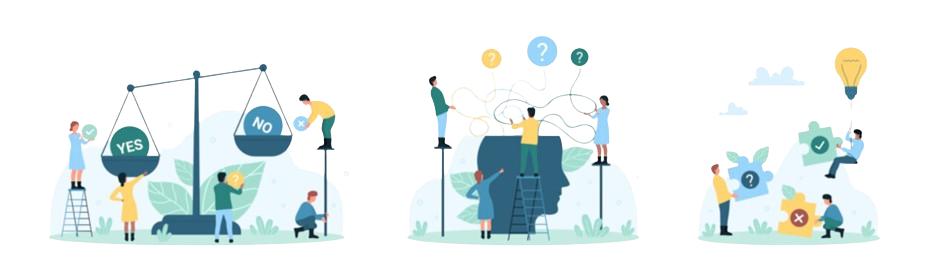
Background App Three: Emotional Notifications You Keep Swiping Away
A friend makes a comment that hurts you. You laugh because everyone else is laughing.
A family member dismisses something important to you. You decide it is not worth creating tension.
A colleague takes credit for your contribution. You remain polite and return to work.
The emotions do not disappear simply because you do not express them. They may continue appearing as irritation, restlessness, withdrawal, or a vague sense of heaviness.
You keep swiping away the notification:
“Not now.”
“It was probably nothing.”
“I should not be so sensitive.”
But the notification returns because the underlying message has not been read.
Acknowledging an emotion does not require turning it into a confrontation. You can recognise, That embarrassed me, without starting an argument. You can admit, I am disappointed, without deciding that the relationship must end.
Sometimes the background process loses power as soon as you stop forcing it to disguise itself.
Background App Four: Constant Self-Monitoring
In social situations, you are not only participating. You are also watching yourself participate.
Am I talking too much?
Was that joke annoying?
Do I look uncomfortable?
Should I say something?
Why am I standing like this?
It is like attending a party while simultaneously operating the security cameras.
Self-awareness can be helpful. Constant self-surveillance is exhausting because attention keeps switching between the actual experience and an internal performance review.
You are never fully inside the conversation. Part of you remains in the control room, analysing facial expressions, replaying sentences, and adjusting your personality in real time.
This may become especially draining when you believe acceptance depends on being perfectly pleasant, useful, impressive, calm, or easy to understand.
The hidden app is not merely asking, “How am I coming across?”
It is asking, “Am I still safe here?”
Background App Five: Decisions Without Deadlines
Should you change jobs? Move to another city? End a relationship? Start the project? Take the course? Say yes to the opportunity?
Large decisions require thought. But thinking without structure can become continuous mental polling.
You reconsider the same arguments every day, hoping that one morning certainty will arrive like a software update. Instead, every option remains open, and your mind keeps recalculating.
A decision becomes especially draining when you demand an impossible guarantee:
“Which choice will ensure that I have no regrets?”
No choice can provide that.
A more useful question may be:
“Which option fits what I know, value, and need right now?”
You can also give the decision a container. Decide what information you still need, when you will collect it, and when you will make the best choice available.
Without a decision date, the debate can remain open indefinitely.
Background App Six: Switching Between Everything
You begin writing a report. A message appears, so you answer it. You return to the report, remember an item you need to order, open another tab, check your inbox, notice a different request, and suddenly find yourself reading something unrelated.
You have been busy for an hour, but nothing feels complete.
The brain does not seamlessly perform several attention-heavy tasks at once. It usually switches between them, and every switch requires some reorientation. Research reviewed by the American Psychological Association suggests that these switching costs can consume substantial productive time, especially when tasks are complex or unfamiliar.
This means visible notifications are not the only interruptions. Internal reminders can create the same pattern.
You may be writing while thinking about lunch, listening while preparing your reply, or resting while evaluating tomorrow’s workload.
Your attention keeps changing apps, and each app demands a few seconds to reload.
By evening, you have not necessarily done too much. You may have switched too often.

Why Rest Sometimes Fails to Recharge You
You finish work, lie on the sofa, and start scrolling. Technically, you are resting. Mentally, however, you are absorbing news, comparing lives, replying to messages, and jumping between emotional tones every few seconds.
Then you go to bed with the unfinished work, unspoken feelings, and tomorrow’s responsibilities still running.
Sleep is essential for attention, memory, emotional regulation, and daytime functioning. Sleep deficiency can leave people tired, less alert, and less able to function effectively at work, school, or socially.
But even adequate time in bed may not feel restorative when the period before sleep contains no real reduction in mental activity.
Rest is not simply the absence of work. It is the experience of not being mentally required somewhere else.
That may mean walking without listening to anything, eating without checking your phone, completing one small task, speaking honestly, or allowing a feeling to exist without immediately solving it.
Conduct a Mental Battery Audit
When your phone battery drains unusually fast, you check which apps are consuming the most power. You can do something similar with your attention.
Ask yourself:
- What keeps returning to my mind without being resolved?
- Which conversation am I repeatedly rehearsing?
- What emotion am I working hard not to feel?
- Which decision has remained open without a deadline?
- Where am I monitoring myself instead of participating?
- What am I trying to remember rather than recording somewhere reliable?
Do not try to fix the entire list at once. That simply creates another demanding background app.
Choose the item consuming the most energy and decide what it needs.
It may need action. It may need scheduling. It may need acceptance, a boundary, an honest conversation, or permission to remain temporarily unresolved.

Closing Apps Without Forcing Them to Crash
Telling yourself to stop worrying rarely closes a mental process. A better approach is to give it a clear status.
Complete it
Handle the five-minute task that has occupied five days of thought.
Schedule it
Assign the task a specific time rather than carrying it everywhere.
Clarify it
Replace “I need to deal with my life” with one concrete problem you can examine.
Express it
Write or say what you have been repeatedly suppressing, even if the first version stays private.
Limit it
Give yourself fifteen minutes to think about the issue, then deliberately return to the present activity.
Release it
Acknowledge when something has no available answer and another hour of analysis will not create one.
Structured reflection can also help make hidden drains more visible. ChatCouncil is an AI mental health app offering journaling, guided meditations, AI counselling, and an AI wellness companion for everyday emotional check-ins. Used thoughtfully, a mental health journal app can provide private mental health support and help separate genuine priorities from thoughts that are simply running on repeat.
You Do Not Need to Run at Full Capacity Every Day
Your mind is not a machine that should remain perfectly efficient from morning to night. Some days will naturally require more energy. Difficult relationships, uncertain situations, demanding work, and major changes can all leave less capacity for everything else.
The goal is not to become endlessly productive. It is to notice where your energy is going.
Perhaps you are not lazy. Perhaps seven invisible processes are running while you attempt the eighth.
Perhaps you do not need another productivity technique. You need to make the phone call, write the feeling down, choose a deadline, close the extra tabs, or admit that something is taking more from you than you have acknowledged.
Your mental battery may not recharge all at once. But every background app you identify gives you a choice.
You can complete it, schedule it, question it, express it, or decide that it no longer deserves permission to run.
Sometimes feeling lighter does not begin with doing less.
It begins with discovering what you have been carrying—even when the screen looked empty.