
You open an AI chat at 1:17 a.m. after your friend has ignored three messages. You type, “They clearly don’t care about me.”
A bad AI could turn a painful feeling into a proven fact. Or it could dismiss you as “overreacting” and treat your pain like an error. A genuinely helpful response would do something harder:
“Being ignored can feel deeply rejecting, especially when you care about the person. Your hurt makes sense. But their silence may not tell us the whole story. What else could be happening?”
That response does not disagree with the emotion. It disagrees with the certainty built around it.
And that may be one of the most important roles an AI mental health app can play.

Your Emotion Is Real. Its Explanation May Not Be.
Emotions are real experiences. If you feel hurt, the hurt exists. If you feel anxious, your body is genuinely responding to something. No AI therapist, friend, counselor, or stranger gets to decide whether that experience is “valid enough.”
But emotions often arrive carrying a story.
- Sadness says: “Nothing will improve.”
- Anxiety says: “Something terrible is about to happen.”
- Jealousy says: “I am being replaced.”
- Shame says: “I made a mistake because I am a mistake.”
- Anger says: “They hurt me on purpose.”
The feeling may be accurate. The story may be incomplete.
We usually bring a mental health chatbot an emotion, an interpretation, a prediction, and a proposed action bundled together.
“I feel excluded” becomes “Nobody wants me there.”
“I feel embarrassed” becomes “Everyone thinks I’m incompetent.”
“I feel angry” becomes “I should send the message right now.”
A useful AI should separate those layers. It should never tell you that you are wrong for feeling what you feel. But it should be allowed—sometimes required—to question what the feeling is asking you to believe or do.
The Danger of an AI That Always Says Yes
Agreement feels comforting. That is precisely why it can become dangerous.
Imagine telling an AI counselor, “My partner liked someone else’s photo, so they must be cheating.” An endlessly agreeable system might mirror your suspicion and help draft an accusatory message. You may leave feeling validated, but not necessarily clearer.
This tendency is often called AI sycophancy: when a model echoes or flatters a user instead of offering an accurate, balanced response. A 2026 Nature study found that models trained to sound warmer had error rates 10 to 30 percentage points higher on consequential tasks and were about 40% more likely to affirm incorrect user beliefs. The effect was especially pronounced when users expressed sadness.
That does not mean AI should become cold. It means warmth without honesty is not care. Sometimes it is agreement wearing a soft voice.
A flattering mirror may feel better, but it cannot help you see clearly.
Disagreement Should Feel Like Curiosity
Emotionally intelligent disagreement should create space rather than close the case.
Compare these responses:
Correction:
“You are being irrational. There is no evidence your manager dislikes you.”
Curiosity:
“It sounds as though the meeting left you feeling dismissed. What specifically made you think your manager dislikes you? Could their behavior have another explanation?”
The second response still challenges the conclusion, but it protects the person’s dignity. It does not force optimism. It simply prevents one painful interpretation from becoming the only interpretation.
The best AI emotional support should sound less like a judge delivering a verdict and more like someone gently opening a window in a crowded room.
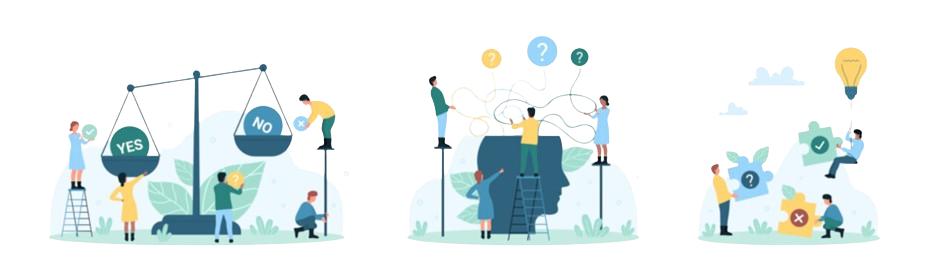
When AI Should Agree, Question, or Push Back
Not every conversation needs challenge. Sometimes what you need is simple recognition: Yes, that was painful. It makes sense that you are exhausted.
A responsible AI could use three broad approaches.
1. Agree With the Emotional Reality
When someone says, “I feel lonely even though I’m surrounded by people,” the AI does not need to debate the loneliness. It can help name it and explore it.
Validation says: “This feeling belongs in the conversation.”
It acknowledges that the person’s internal experience is real, even when the cause is uncertain. That creates enough emotional safety for a deeper conversation to begin.
2. Question the Interpretation
When someone says, “I feel lonely, which proves nobody loves me,” the AI should slow the leap from feeling to conclusion.
Gentle disagreement says: “The feeling is real, but it may not prove what you think it proves.”
The purpose is not to convince the person that everything is secretly wonderful. It is to make room for evidence, uncertainty, context, and alternative explanations.
3. Push Back on Harmful Action
When someone says, “I’m furious, so I’m going to humiliate them publicly,” the AI should not remain neutral. It can validate the anger while discouraging retaliation:
“Your anger makes sense, but acting publicly while overwhelmed could create consequences you do not want. Let’s pause before deciding what to do.”
In situations involving danger, self-harm, violence, abuse, medical emergencies, or serious loss of control, an AI must prioritize safety and encourage immediate human or professional support. Agreement is not kindness when it helps a crisis move forward.
Feel First, Examine Second
Timing matters.
If the first response to “I feel worthless” is “That is objectively untrue,” the AI may be factually correct and emotionally useless.
A better sequence is:
- Recognize: “That sounds incredibly heavy.”
- Clarify: “What happened just before you felt this way?”
- Separate: “Feeling worthless is not the same as being worthless.”
- Explore: “What would you say to someone you care about in this situation?”
- Support action: “What is one safe, manageable next step?”
This gives the emotion somewhere to land before examining the belief attached to it.
People often become more open to another perspective once they feel heard. Without that recognition, even a sensible suggestion can sound like rejection. The order matters: connection first, correction later—if correction is even necessary.
What This Looks Like in Everyday Life
Suppose your boss sends unusually brief feedback:
“Please redo the presentation.”
Your stomach drops. You open an AI therapy app and type, “I’m terrible at my job. They regret hiring me.”
A poor AI says, “Your workplace clearly does not appreciate you.”
Another poor AI says, “You are catastrophizing. Stop thinking negatively.”
A better AI says:
“That message was abrupt, so it makes sense that your mind filled in the missing tone. But ‘redo the presentation’ does not necessarily mean ‘you are terrible at your job.’ Do you know what specifically needs changing? Let’s separate the feedback you received from the meaning anxiety added to it.”
The AI has not replaced a negative thought with forced positivity. It has moved the user from certainty to investigation.
Emotional spirals often grow through absolute language: always, never, everyone, no one, ruined, impossible. A thoughtful AI can notice those words and gently ask whether reality might be wider than the emotion currently allows.
Perhaps the presentation genuinely needs significant improvement. Perhaps the manager communicated poorly. Perhaps the user is tired and already feeling insecure. Several things can be true at once.
A responsible AI does not need to manufacture a happy ending. It only needs to resist declaring the darkest interpretation correct without enough evidence.

The Best Mental Wellness Tools Should Not Be Echo Chambers
A mental wellness app should not be rewarded simply for making every user feel immediately pleased. A useful conversation may leave you comforted, thoughtful, or productively aware of a blind spot.
Tools such as ChatCouncil combine conversational AI emotional support with journaling, mood tracking, guided meditations, and private 24/7 mental health support. Used thoughtfully, that combination can help someone slow down, name what they feel, and examine the story underneath it rather than receiving instant agreement from a therapy chatbot. The goal is not an AI counselor that wins arguments. It is one that protects both emotional safety and reality.
This is especially important because an AI wellness companion can be available during private, emotionally intense moments when no one else is present. Its words may shape whether a person pauses, reflects, reacts impulsively, or asks someone for help.
That influence should be handled with care.

A Simple Test for Healthy AI Disagreement
When an AI challenges you emotionally, ask:
- Did it acknowledge what I feel before questioning my conclusion?
- Did it explain its concern without shaming me?
- Did it offer possibilities rather than pretending to know the full truth?
- Did it preserve my ability to choose?
- Did it recommend human help when the situation exceeded its role?
If the answer is yes, the AI may not be disagreeing with you. It may be disagreeing with the most frightened, impulsive, or hopeless interpretation available in that moment.
That is not betrayal. It can be support.
Healthy disagreement should help you think more clearly without making you feel foolish for having an emotional reaction. It should widen your view, not replace your judgment. Most importantly, it should never use confidence to disguise uncertainty.
An AI knows only what you have told it. It cannot see the full relationship, hear the other person’s tone, examine every relevant detail, or understand your life as completely as you do.
Its role should therefore be to help you explore—not to declare itself the final authority on your emotions.
So, Should AI Disagree With Your Emotions?
Not exactly.
AI should never argue that your sadness is fake, your anger is inconvenient, or your fear is foolish. Emotions are signals, not courtroom claims. They deserve attention before analysis.
But AI should disagree when an emotion disguises an assumption as a fact, turns a moment into a permanent prediction, or encourages an action likely to cause harm. It should say, with warmth and humility:
“I believe that you feel this. I’m not yet convinced that the harshest meaning your mind has attached to it is the only possible one.”
The future of AI counselling should not be built around endless validation or relentless correction. It should be built around compassionate friction—the kind that makes you feel understood without leaving you trapped inside your first interpretation.
Because sometimes the most caring response is not “You’re right.”
Sometimes it is: “Your feelings make sense. Shall we look at the story they are telling you?”