
At 2:13 a.m., emotional pain can feel strangely louder.
The house is quiet. Your friends are asleep. Your therapist’s next available appointment is five days away. You have already scrolled through social media, replayed the same conversation twelve times, and told yourself to “stop overthinking”—which, unsurprisingly, has not worked.
What you need may not be a diagnosis, a treatment plan, or a life-changing revelation. You may simply need somewhere safe to say:
“I am not doing well right now.”
This is the promise behind 24/7 mental health support: care that does not disappear when office hours end. But can emotional support truly be available every hour of every day—and can it remain helpful, private, and safe?
The answer is increasingly yes, but only if we understand what round-the-clock support should actually mean.

The Problem With Appointment-Shaped Emotions
Traditional therapy is usually organised around scheduled sessions. Human emotions are not.
Anxiety does not check your calendar before arriving. Loneliness does not wait for Monday morning. A stressful message can ruin your evening in seconds. A memory can surface while you are commuting, studying, feeding a baby, or staring at the ceiling long after midnight.
This timing mismatch matters because emotional distress often grows in the space between feeling something and being able to talk about it.
According to the World Health Organization, more than one billion people live with a mental health condition, while large gaps in access to care remain. In low-income countries, fewer than one in ten affected people receive care, compared with more than half in higher-income countries.
The challenge is not simply that people need more therapy appointments. They also need support during the thousands of ordinary moments between those appointments.
What Does “Available 24/7” Really Mean?
It should not mean that one exhausted counsellor answers messages all night.
Instead, imagine emotional support as a building with several doors:
- Immediate conversation: A person can express what they are feeling without waiting days for an appointment.
- Self-guided help: Breathing exercises, grounding techniques, journaling prompts, or a guided meditation for anxiety can help someone move through a difficult moment.
- Ongoing reflection: A mental health journal app or mood tracking app can help users notice patterns across days and weeks.
- Professional care: Therapists, counsellors, psychologists, and doctors remain available for deeper assessment and treatment.
- Emergency escalation: When someone may be in immediate danger, the system directs them toward trained human crisis support or emergency services.
No single layer is enough. The real power comes from connecting them.
A mental health app may help at midnight. A therapist may help uncover the deeper pattern on Thursday. A trusted friend may help someone feel less alone on Saturday. Emotional care becomes more available when these forms of support cooperate rather than compete.
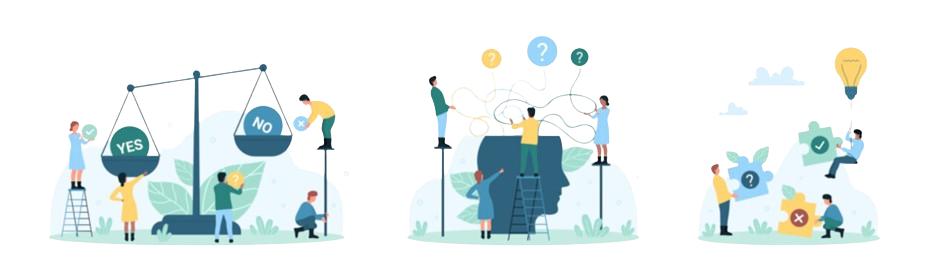
Where AI Fits Into the Night-Time Gap
An AI mental health app can offer something human services often cannot: instant availability at enormous scale.
A well-designed mental health chatbot can invite someone to slow down, describe what happened, name the emotion, and choose a manageable next step. It can guide a breathing exercise, suggest writing down racing thoughts, or help separate a feared outcome from what is actually known.
That does not make it an all-knowing AI therapist. It makes it a tool for emotional first response.
Recent research is promising but should be interpreted carefully. A 2026 systematic review and meta-analysis covering thousands of participants found that mental health chatbots produced statistically significant reductions in symptoms of depression and anxiety compared with control groups. The average effects were modest, which suggests usefulness—not magic.
This distinction matters. An AI counselor may help you get through a hard hour. It should not pretend it can fully understand your history, diagnose a condition, manage medication, or replace a qualified professional.
A Small Moment Can Prevent a Larger Spiral
Consider Maya, who receives a short message from her manager:
“Can we talk tomorrow morning?”
Her brain immediately fills in the blanks. She assumes she has failed. Her chest tightens. She begins mentally rewriting every decision she made that week.
In the past, Maya might have spent the entire night spiralling. With access to an anxiety support app, she could open a private conversation and work through three questions:
- What do I know for certain?
- What am I assuming?
- What can I do before tomorrow?
She realises she knows almost nothing beyond the fact that a conversation has been requested. She writes down her concerns, does a two-minute grounding exercise, and decides to prepare a brief project update in the morning.
The tool has not solved her workplace problem. It has done something smaller and deeply valuable: it has helped her avoid turning uncertainty into catastrophe.
That is where AI emotional support may be most useful—not as a replacement for human relationships, but as a bridge between distress and the next helpful action.

The Quiet Advantage: Support Without the Social Performance
Asking another person for help can be difficult.
People worry about being judged, becoming a burden, explaining themselves badly, or hearing, “But you seemed fine.” Sometimes they are not ready to speak aloud. Sometimes they do not even know what they are feeling yet.
A private digital space can lower the first barrier.
Someone may begin with, “I feel weird,” then gradually discover that “weird” means embarrassed, rejected, overstimulated, exhausted, or afraid. A thoughtful AI wellness companion can help users find language before they decide whether to speak with a friend, family member, or professional.
Platforms such as ChatCouncil explore this in-between space by combining AI-based counselling conversations with journaling, guided meditations, and everyday wellness tools. The value is not merely having another chatbot. It is giving people a structured place to pause, reflect, and seek support whenever difficult feelings appear.
For people who avoid support because the first step feels too large, a smaller and more private first step can matter.
Availability Is Not the Same as Safety
A service can be online every second and still be unhelpful.
True 24/7 support requires more than a chat box. It needs clear boundaries, responsible design, and honest communication.
A trustworthy AI chatbot for mental health should:
- Clearly explain that it is not a human therapist.
- Avoid diagnosing users from a short conversation.
- Protect sensitive information with strong privacy practices.
- Recognise signs of immediate danger and recommend appropriate human help.
- Avoid encouraging emotional dependency.
- Admit uncertainty instead of inventing confident answers.
- Encourage healthy offline relationships and professional support when needed.
This is especially important because vulnerable people may interpret a warm conversational tone as proof of expertise. A system that sounds caring must not exaggerate what it knows.
Private mental health support should also be private in practice, not merely in marketing. Users deserve understandable information about what is stored, how conversations are protected, and whether their data is used for advertising, training, or profiling.

The Human Role May Become More Important, Not Less
It is easy to frame this conversation as “AI versus therapists.” That misses the larger opportunity.
Round-the-clock digital tools could allow human professionals to focus more energy on the work that requires human judgment: complex histories, trauma, relationships, diagnosis, treatment planning, and the subtle meaning behind what a person says—or cannot say.
Between appointments, an AI journaling app might help someone remember important events, record mood changes, practise a coping skill, or prepare questions for their next session. Instead of replacing therapy, the technology can help preserve continuity.
Imagine a person attending one human therapy session each week while using a supportive self care app for reflection between sessions. The therapist provides depth. The digital tool provides frequency. Friends and family provide belonging. Crisis services provide urgent intervention.
Together, they create something far stronger than any one source of help.
So, Can Emotional Support Really Be Available All Day?
Yes—but we should be precise about the promise.
We can make some form of meaningful emotional support available 24/7. People can have immediate access to reflection, grounding exercises, guided conversations, journaling, mood awareness, and directions toward human care.
What we cannot guarantee is that every person will have a qualified human professional beside them at every moment. Nor should an AI therapy app pretend to offer everything a human therapist can.
The goal is not to automate care until people become isolated. The goal is to reduce the number of moments in which someone feels they have absolutely nowhere to turn.
At 2:13 a.m., support may begin with a screen. At 9:00 a.m., it may continue with a friend. On Thursday, it may deepen with a therapist.
That is what the future of emotional care could look like: not one perfect helper who is always awake, but a connected circle of support that never fully closes.